

How Much Weight Can a Solid Wood Floating Shelf Hold?
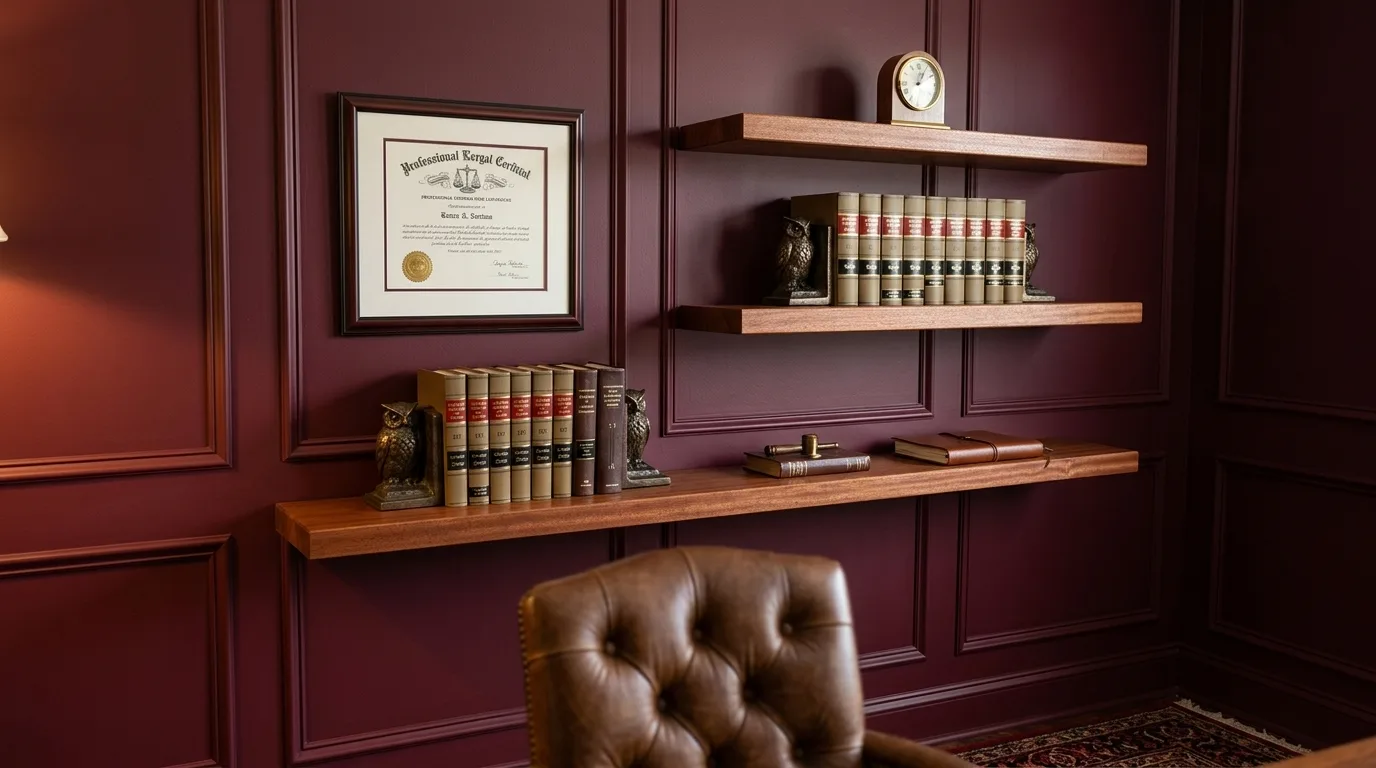
A properly installed solid hardwood floating shelf on our concealed bracket system is load-tested to 300 lb — an aircraft-grade aluminum plate with steel rods, lagged into studs, brick, or masonry. For scale: a 36" run of hardcover books is about 60 lb, a full shelf of cast iron maybe 80. The limiting factor is almost never the wood — it's the hardware and the wall it's anchored to. Here's the whole equation.
What Actually Determines Weight Capacity
Four things decide how much a floating shelf holds, and only one of them is the wood:
- Bracket hardware. A concealed steel-rod system rated for the load — not the light-gauge folded brackets sold at big-box stores. Ours is included with every shelf and load-tested to 300 lb.
- Wall substrate. Lags into studs, blocking, or masonry outperform drywall anchors by an order of magnitude. A shelf glued to a cheap L-bracket in drywall alone can fail under 20 lb.
- Wood thickness. 1.5"–2" solid boards resist deflection; thin veneered panels and hollow torsion boxes crush around their own mounting points — one reason we don't build in veneer or MDF, ever.
- Span. A 24" shelf holds more per foot than a 60" run at the same thickness; long runs just get another bracket plate.
The thickness half of this equation gets its own guide: how thick a floating shelf needs to be.
Floating Bracket vs. Regular Bracket
A true floating shelf bracket lives entirely inside the wood: rod channels are CNC-routed into the back of your exact shelf in our shop, and the shelf slides onto the wall-mounted plate so no metal shows from any angle — front, sides, or underneath. Regular brackets sit exposed under the shelf. The floating version costs more in labor because the wood is bored to match the hardware precisely, but it's what makes a 300 lb shelf read as a board hovering on the wall. The system, specs, and the two-step install video are on the hidden bracket page.
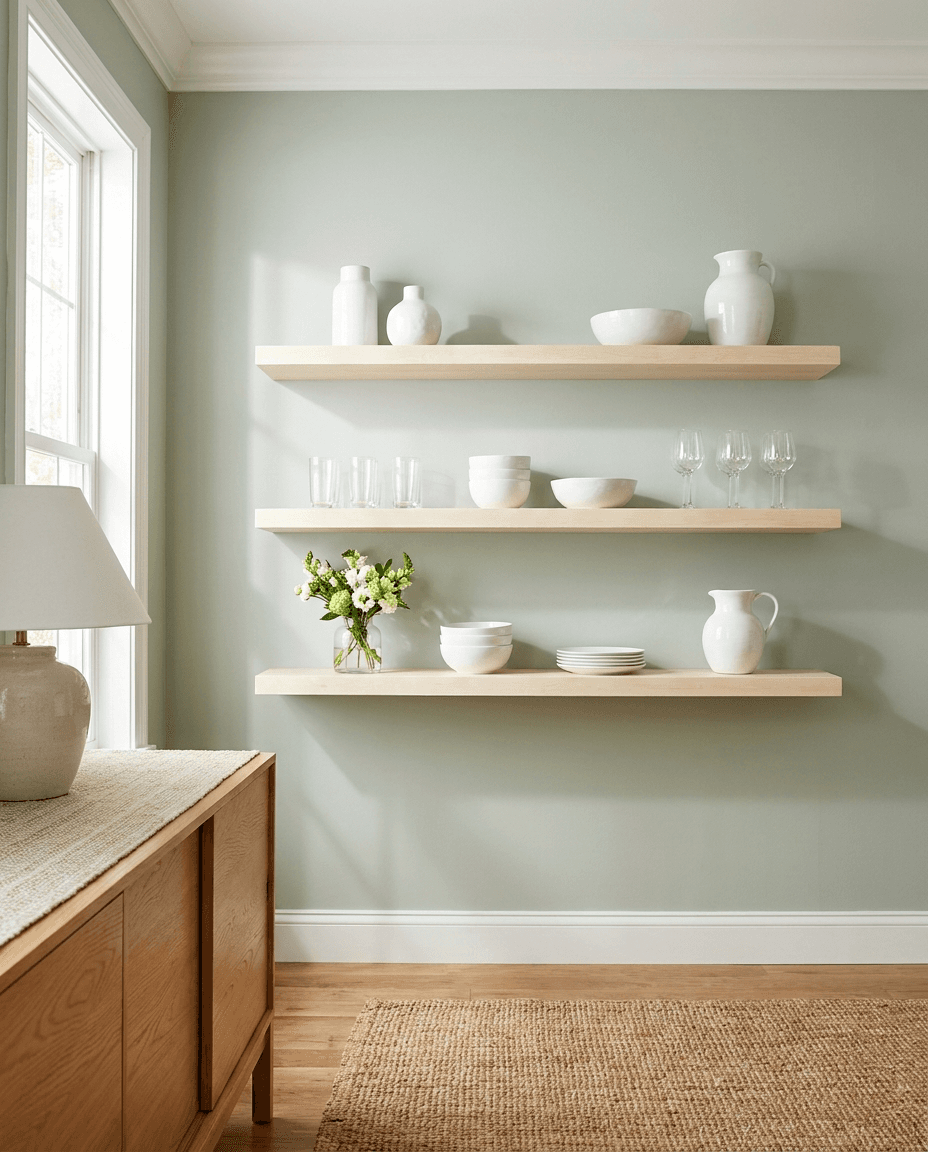
Dishware is a real load — 10"–12" deep, 1.75"–2" thick, and the bracket does the rest.
Live Edge Holds Just as Much
A live edge shelf's strength comes from the wood's mass and the bracket, not the edge profile — the natural edge is cosmetic. Milled to the same thickness, it carries the same load. We hung live edge walnut floating shelves alongside a full bar and countertop build in Huntington Station, NY, on the same hidden bracket system across all three surfaces — see that project, and the whole natural-edge story in the live edge guide.
Strong Enough for Kitchens, Bars, and Commercial Work
Open kitchen shelving is our most common install: plates, glassware, bottles, small appliances. For that duty we build 1.75"–2" thick at 10"–12" deep, sealed with the food-safe zero-VOC hardwax oil that shrugs off steam and splashes. For commercial applications — restaurant service stations, back-bar display — we spec bracket count and spacing per project rather than using a one-size hardware set. The room-by-room guidance is in the floating shelf guide.
Made to the Quarter Inch
Every shelf is built for the specific wall, niche, or cabinet run — no stock-size limitation. We commonly build 18" to 8+ feet in a single board, in walnut, white oak, hard maple, cherry, and exotics like padauk or wenge, straight edge or live edge. Browse species and depths in the hardwood shelves collection, or price your exact dimensions in the Shelf Builder — the number updates live, bracket included.
Spec the Load, Then the Shelf
Know your span and what's going on the shelf? The right thickness and depth fall out of the tables in the shelf guide, and the Builder prices it instantly. Current lead time is 4-6 weeks, and every shelf ships crated, nationwide. See it built: our white oak floating shelves are milled to exactly the specs this guide recommends.
floating shelf, cut to your dimensions.
Each one is milled from solid hardwood to your exact measurements and finished by hand in our Farmingdale shop.
Design yours →Kevin has been designing and building made-to-order solid hardwood countertops, table tops, and shelving in Farmingdale, NY since 2017 — every piece milled and finished in the Hardtwood shop.
More about the shop →