

European White Oak vs American White Oak: What’s the Difference?
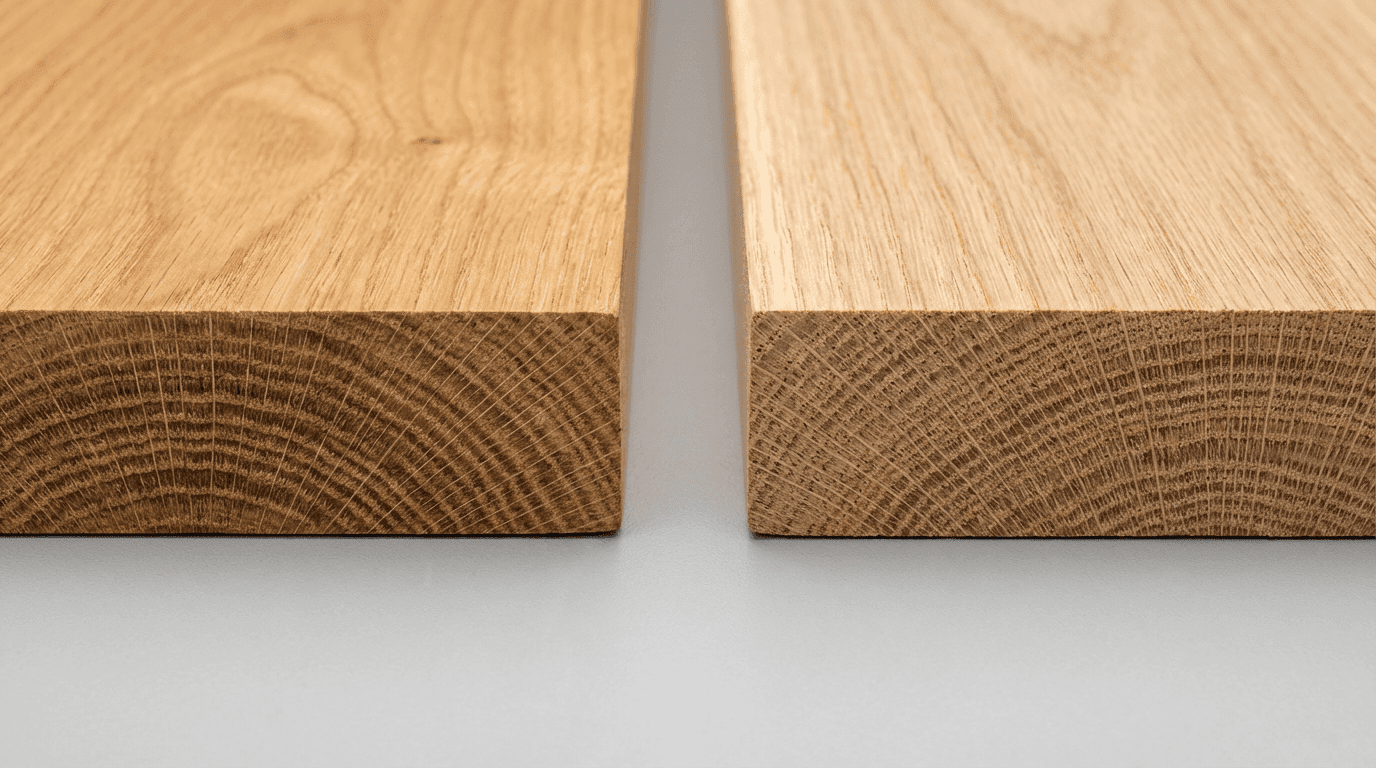
If you've been searching for "European white oak vs white oak," you're not alone. Designers, builders, and homeowners constantly compare these two heavy-hitters when choosing flooring, furniture, and solid wood tabletops. Both are true oaks, both are durable, and both can look incredible in modern interiors — but they're not identical. This guide breaks down the real-world differences in color, grain, hardness, stability, and best use cases so you can choose the right oak for your project.
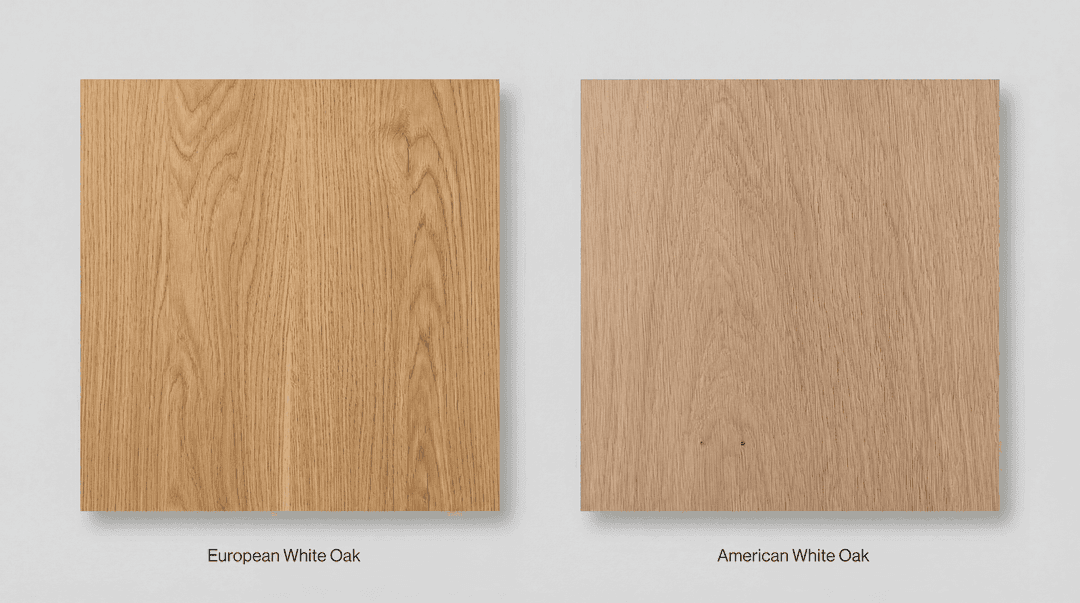
European white oak (left) with its warm honeyed tone next to lighter American white oak (right).
European White Oak vs American White Oak: Side-by-Side
If you're skimming, here's the short version. Both species are durable, stable, and great for furniture, flooring, and white oak countertops. Most differences come down to tone, grain movement, board lengths, and stain behavior.
European White Oak
Warm, honey-golden tone with more natural character — waves, pips, small knots — and more consistent color from board to board. High tannin content makes it excellent for reactive and fumed finishes. Imported, so it's often priced higher.
American White Oak
Lighter color with subtle yellow or pink undertones and straighter, more uniform grain, with more variation between boards. Very durable and slightly harder on the Janka scale. Readily available and budget-friendly.
How European and American White Oak Compare Visually
This is where most designers feel the difference. European white oak usually appears richer and more neutral, with a warm golden base and unique grain character. American white oak leans lighter and more linear, with occasional yellow or pink undertones depending on the cut.
European oak feels naturally "designed" — clean but full of character. American oak feels clean, modern, and predictable, which makes it excellent for contemporary builds and large commercial runs where consistency matters. If arrow-straight grain is the goal, also consider rift sawn or quarter sawn white oak.
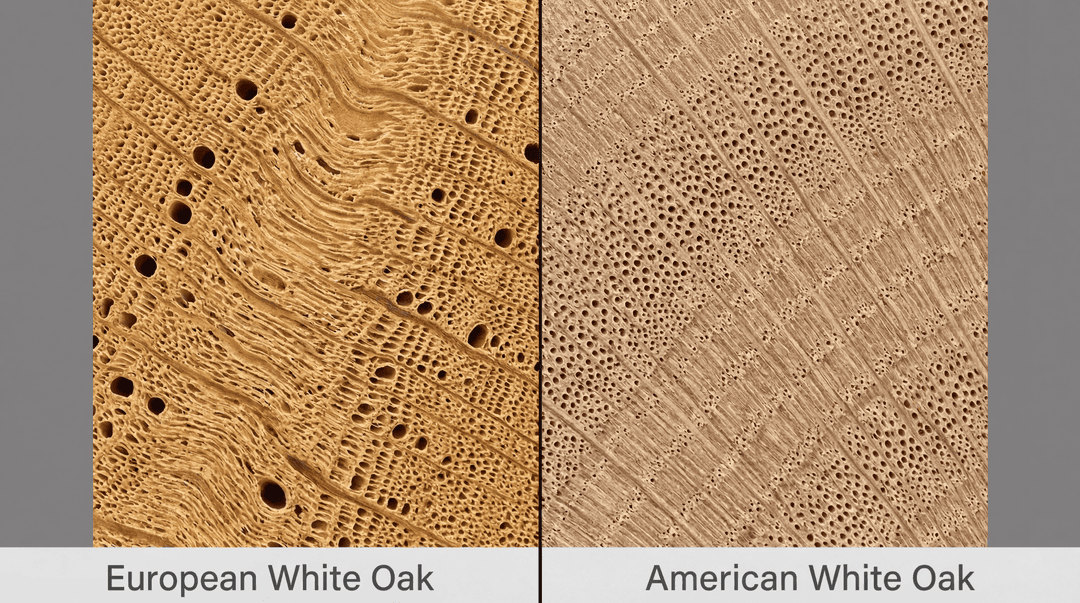
European white oak has more visual depth and movement; American white oak shows cleaner, straighter lines.
Hardness, Stability, and Real-World Performance
Hardness & wear
- American white oak is slightly harder on the Janka scale (1,360 lbf).
- European oak performs equally well in real-world use.
- For tabletops and countertops, finish quality matters more than the hardness difference.
Stability & movement
- European oak is known for excellent dimensional stability.
- American oak is also very stable when properly dried.
- Good joinery and correct installation matter more than species choice.
Staining & finishing
- European oak has higher tannins — ideal for fuming and reactive stains.
- American oak takes standard stains well but reacts less strongly.
- Both finish beautifully with modern hardwax oils — the food-safe, VOC-free finish we use on every top.

A high-quality finish makes a far bigger difference in durability than species selection alone.
Best Oak for Furniture, Countertops, and Interior Design
Both European and American white oak can be the "best oak for furniture" — it depends entirely on the look you're going for.
When European white oak shines
- Modern, Scandinavian, and Japandi interiors.
- High-end residential projects needing warm, refined tones.
- Hospitality spaces where visual consistency matters.
- Projects using smoked, fumed, or reactive finishes.
It's especially beautiful in custom European oak countertops and large dining tables where tone consistency is important.
When American white oak is the better fit
- Modern builds needing long straight-grain runs.
- Large commercial projects requiring cost efficiency.
- Traditional and transitional designs featuring quartersawn ray fleck.
- Projects using standard stains rather than reactive finishes.
American white oak provides a clean, timeless look at a more accessible price point — ideal for production-scale furniture and cabinetry.
Which Oak Should You Choose?
Both European and American white oak are premium hardwoods capable of lasting decades. If you want richer tone, consistency, and a boutique feel, choose European white oak. If you want straighter grain, lighter color, and budget flexibility, choose American white oak. Whichever way you lean, comparing physical hardwood samples in your own light settles it faster than any photo.

European white oak brings a warm, natural elegance perfect for modern interiors.
Ready to move from research to a real custom build? Explore European oak tabletops and countertops, read more on About Our Wood, or browse finish options on the color swatches page.
White Oak table top, cut to your dimensions.
Each one is milled from solid White Oak to your exact measurements and finished by hand in our Farmingdale shop.
Design yours →Kevin has been designing and building made-to-order solid hardwood countertops, table tops, and shelving in Farmingdale, NY since 2017 — every piece milled and finished in the Hardtwood shop.
More about the shop →