

Waterfall Tables & Countertops in Solid Wood
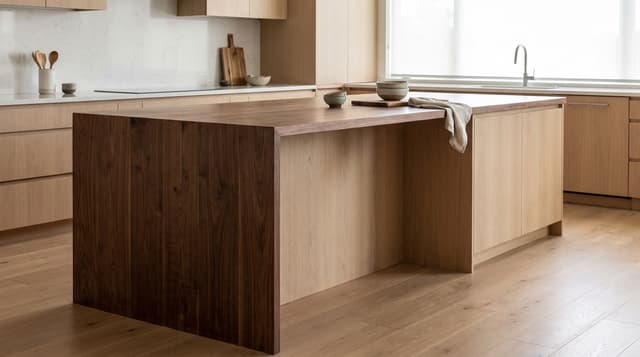
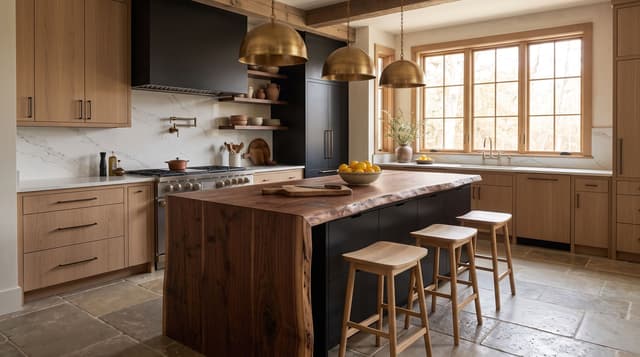
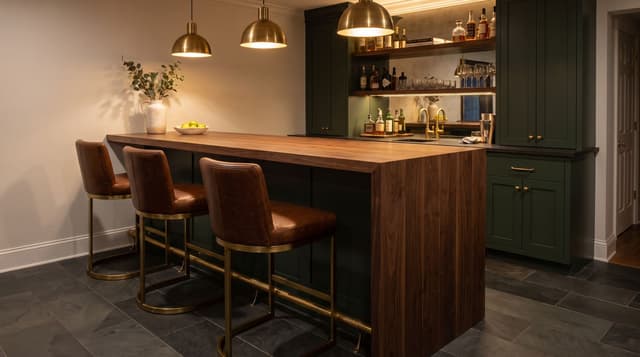
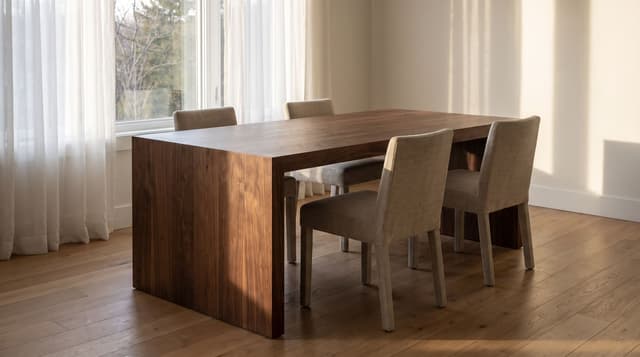
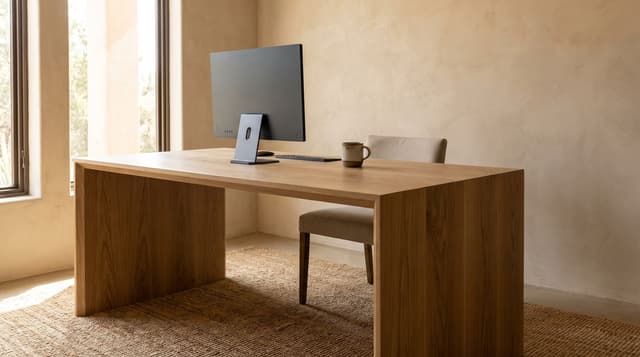
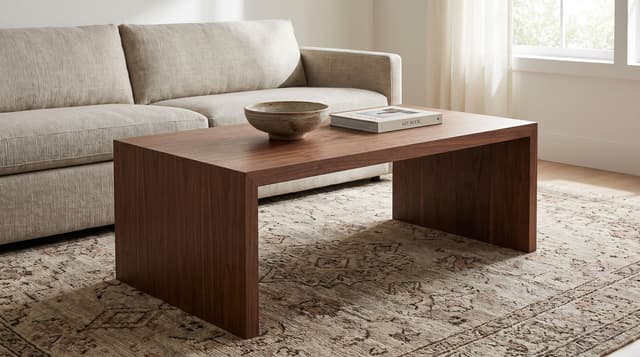
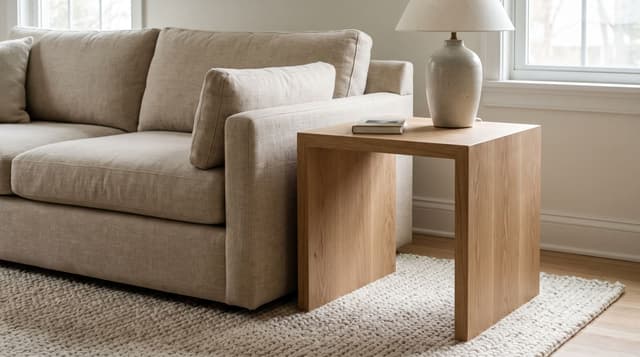
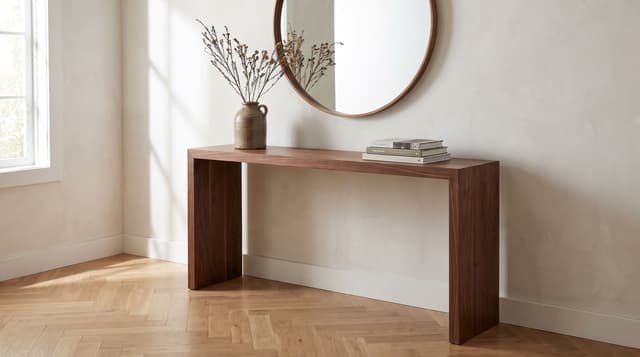
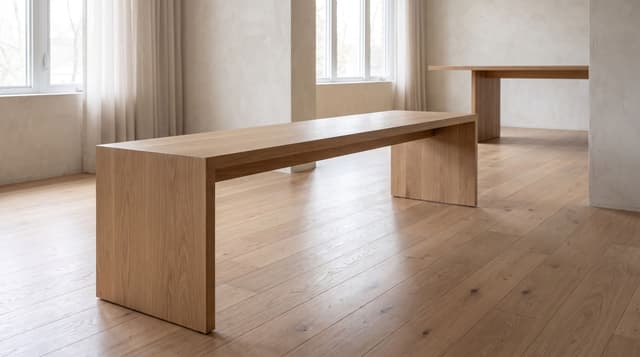
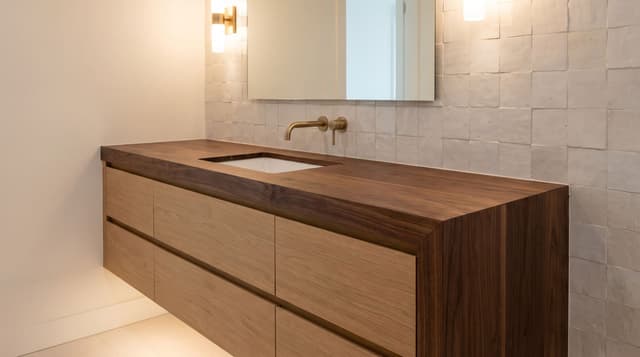
A waterfall edge in solid wood: the top folds down at a 45° miter and runs to the floor, the grain wrapping the corner. Waterfall islands, bar tops, dining tables, desks, coffee tables, consoles, benches and vanities — any species, any size, face grain or live edge, priced instantly in the Builder and shipped nationwide.
What a Waterfall Edge Is
The fold
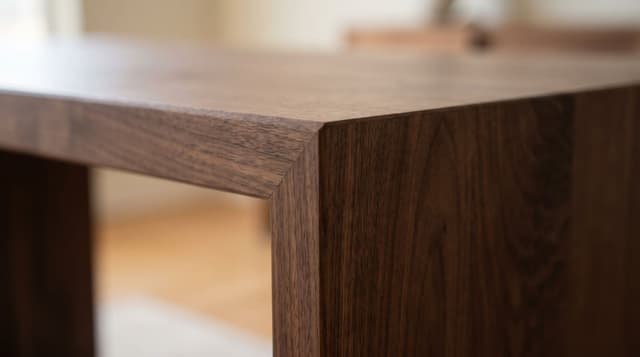
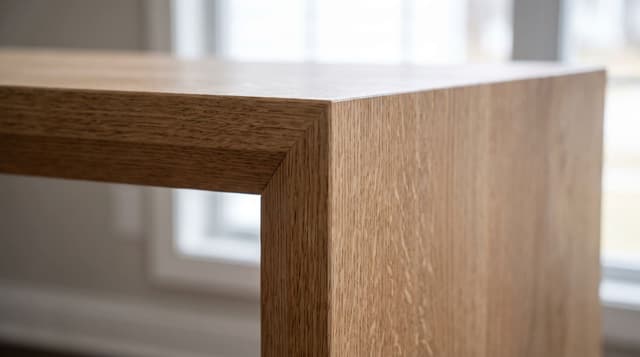
Two 45° cuts, one on the end of the top and one on the top of the leg, meet in a corner that shows no end grain. The grain that ran the length of the top turns the corner and runs down the leg. Done well, you have to be a hand’s width away to find the seam.
Ends, not sides
We fold the ends of a top and never the long side, for a reason in the wood itself. Grain runs the length of the top, so a leg folded off an end keeps its grain vertical and moves with the seasons exactly as the top does across its width. A leg off the long side would put the two panels’ movement at right angles and open the miter within a year.
Both ends or one
A waterfall table stands on its folded ends, so a table takes both. A countertop’s cabinet carries the rest of the run, so an island or bar top can fall on the left end, the right end, or both. The Builder offers exactly those choices for each type.
Waterfall Tables, Islands and Countertops
The same fold, at every height a room asks for. Countertops can fall on one end or both, since the cabinet carries the rest; a table stands on its waterfall ends, so it takes both. Three forms come in set sizes as products; everything else starts in the Builder with the fold already on. A floating shelf that returns down a wall, a reception desk, or anything not below is a quote from your drawing.
How We Build a Waterfall Edge in Solid Wood
One panel, folded
The grain only wraps the corner if the top and the legs come out of the same glued-up panel. So we mill the whole thing as one: the top length plus every leg plus a thickness for each miter. A 72″ table at 30″ high is a 132″ panel before the first miter is cut. The offcuts are the waste, and the grain meets itself at the corner because it never left.
The edge
Every waterfall piece comes eased (a softened square edge) or chamfered (a 45° bevel that reads as a shadow line along the top and down the leg). Both are free choices in the Builder and on the set-size products; the other router profiles stay on flat tops, since a profile has to turn the corner cleanly.
The joint
Each fold is a 45° miter both ways, splined the full width with hardwood, glued, and braced from the inside corner where nobody sees it. C-channel across the underside of a long top and adjustable glides in the leg feet finish the structure, because floors are never flat and a mitered corner cannot be shimmed.
Live edge and species
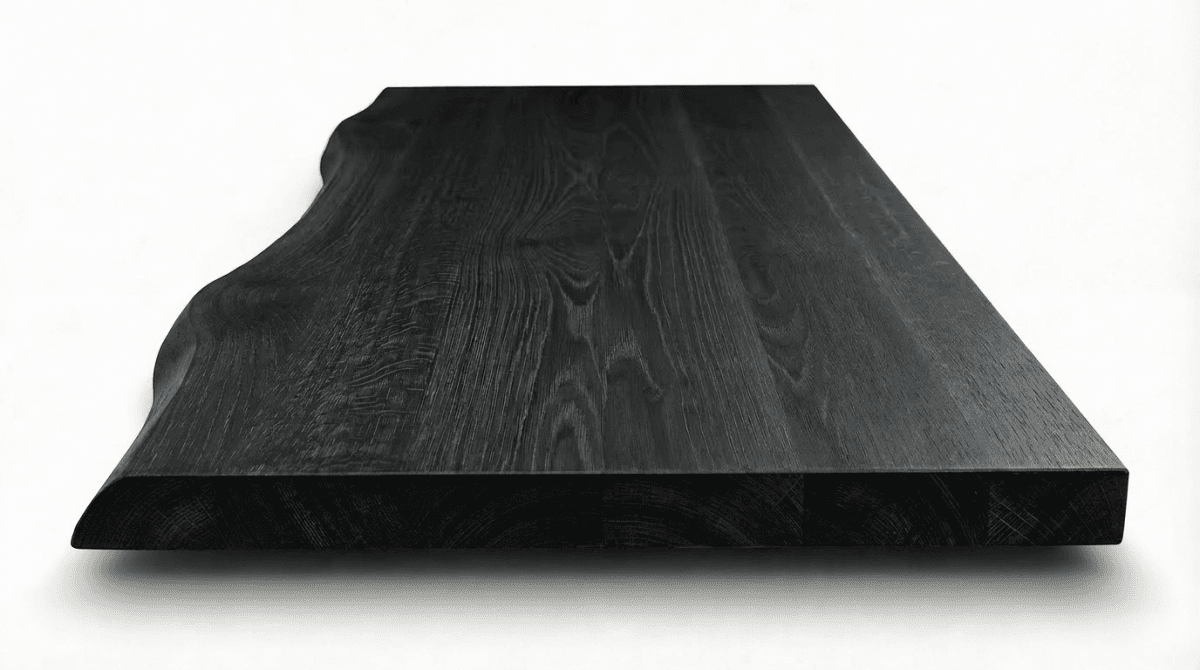
On a live-edge piece the bark line runs down the outside of the leg, because the leg is the same board continued: we pick that outside board first, to the full folded length, and build the panel to it. Every species we stock is available, face grain or edge grain; end grain has no long grain to wrap and is the one construction we leave out.
Shipping
A waterfall piece is finished assembled and crated assembled — a folded table is about twice the cube of a flat top and cannot be stacked. It ships freight, nationwide, and the crate is inside the per-end price rather than a line on the invoice.
The Fold, Up Close
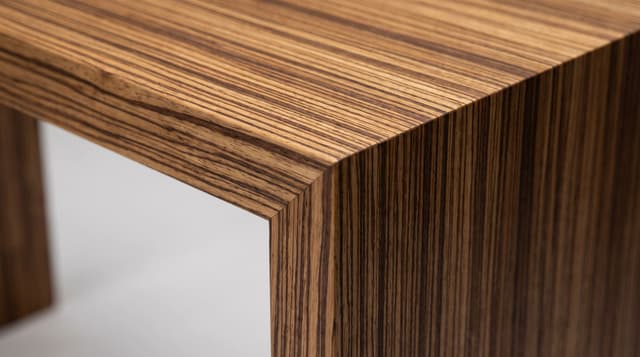
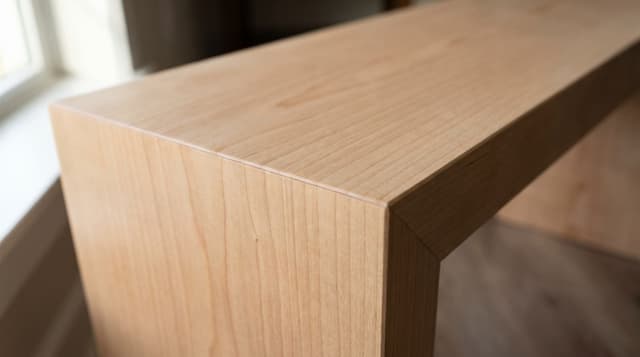
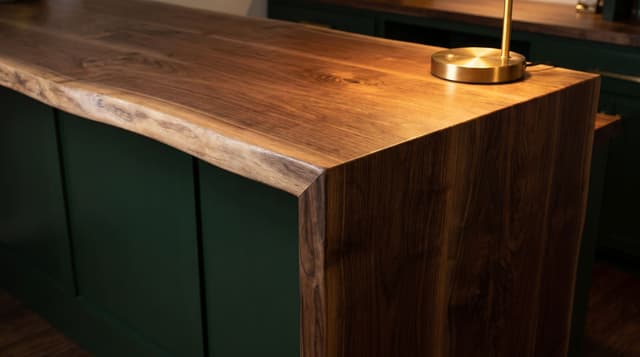
Ready to Order
Three set sizes, any wood
If one of the standard sizes fits, skip the Builder: the Waterfall Coffee Table (48″ × 24″, 18″ high), the Waterfall Desk (60″ × 30″, 30″ high) and the Waterfall Dining Table (72″ × 36″, 30″ high) each come in two sizes, every species we stock, face grain or live edge, priced on the page. Each has a tearsheet with the dimensions per size. Anything else is the Builder, at the same price for the same piece.
What It Costs
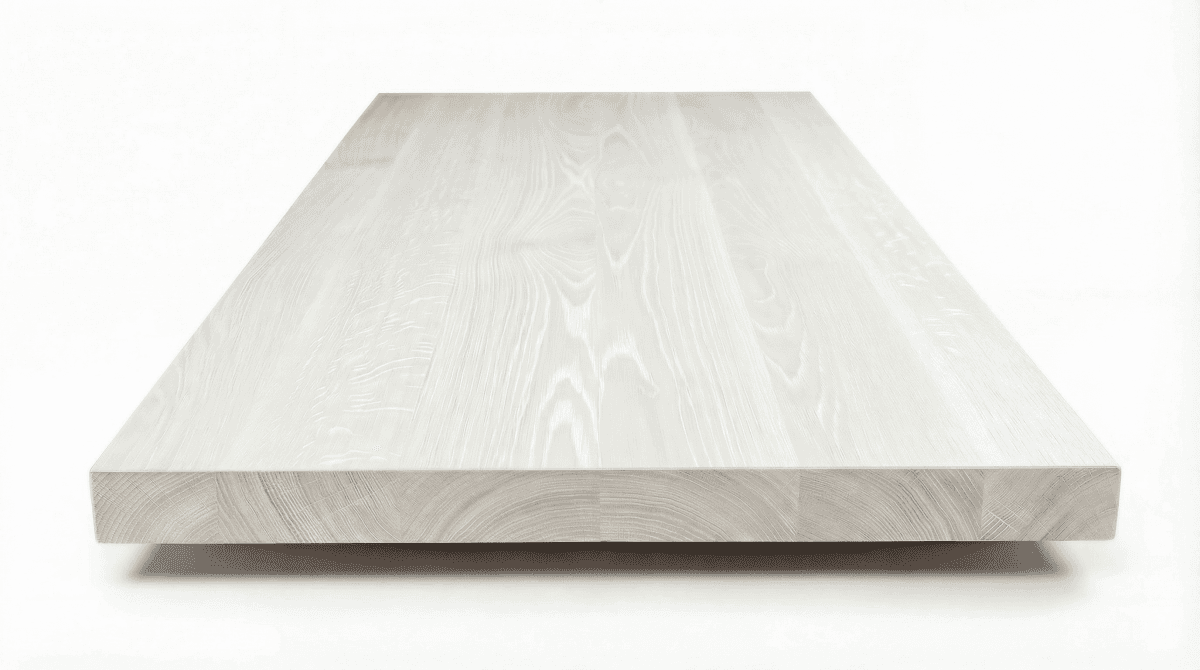
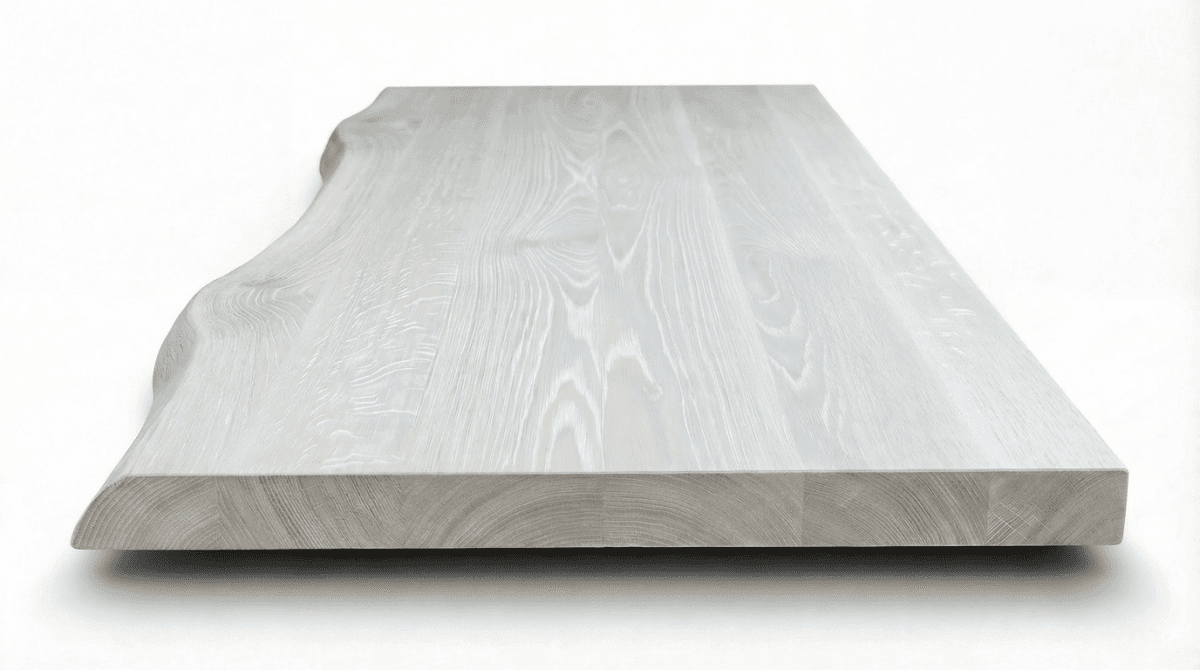
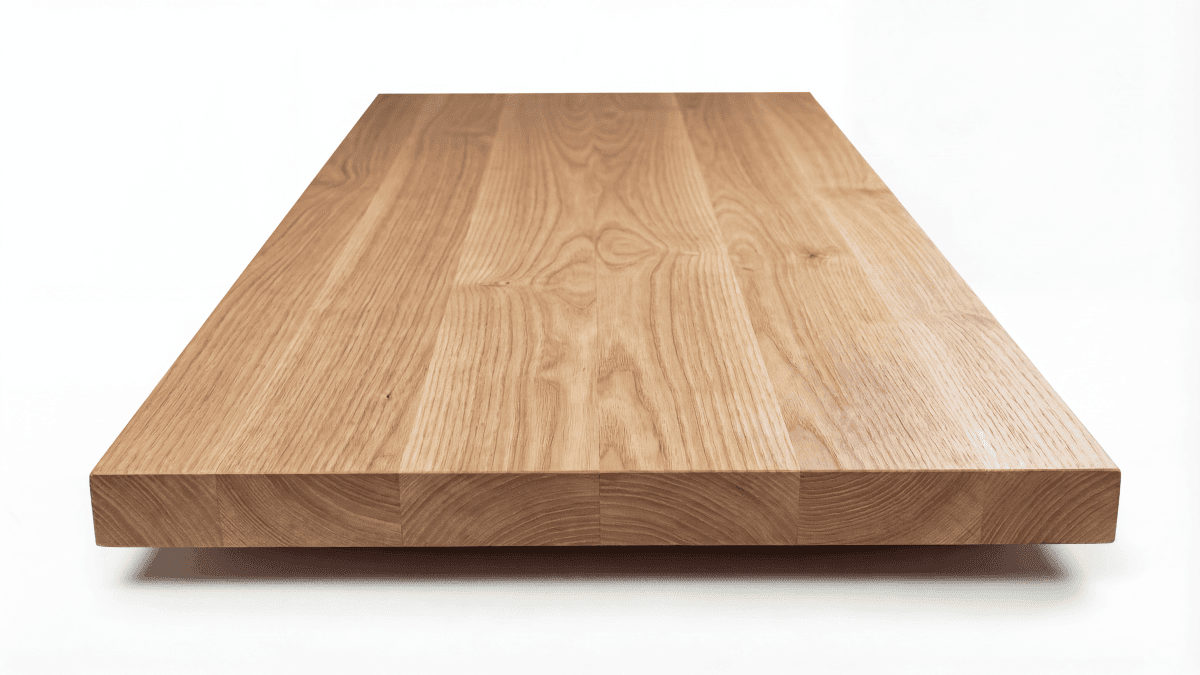
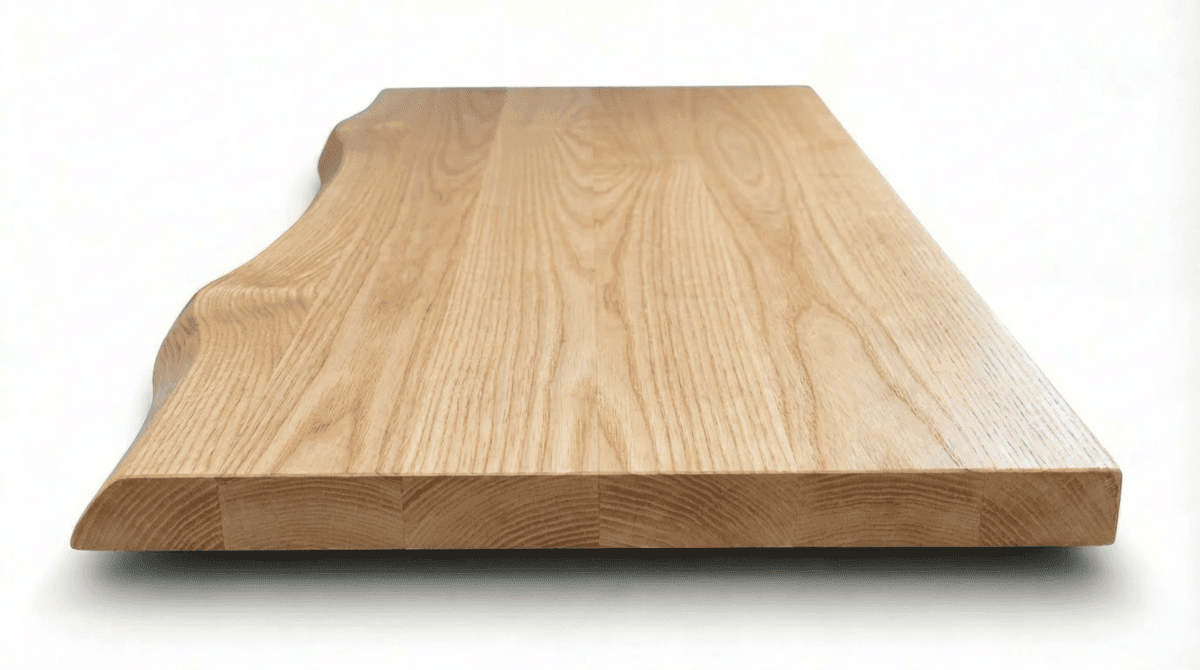
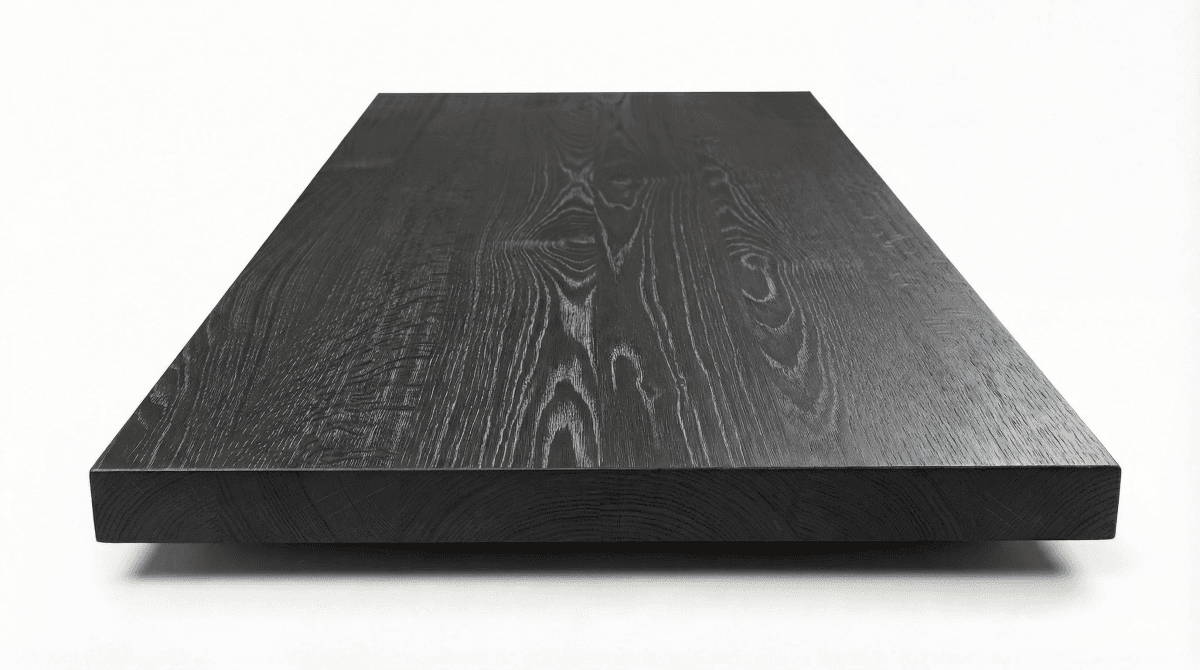
Price it, pick the wood, hold it in your hand.
Wood, length, width, thickness, edge and add-ons, the delivered price following every choice.
Price a waterfall table in the BuilderA finished piece of the real board, shipped in days, the price off your order.
Order samplesWaterfall Table & Countertop FAQ
What buyers ask before ordering a waterfall table or countertop in solid wood.