

Cabinet Door Styles, Explained: Slab, Shaker, Fluted and the Rest
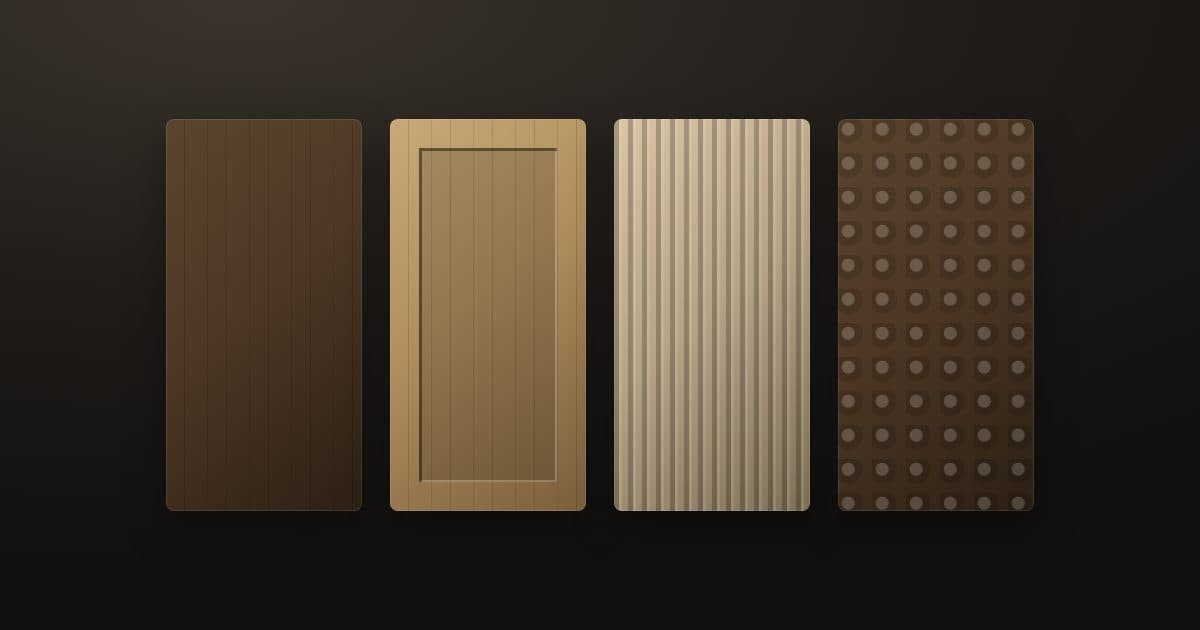
Every cabinet door we make is solid hardwood through and through, so the question is never what the door is made of. It is what the face does. Six styles cover almost every kitchen: the slab, the one-piece shaker, and four textures cut into the solid face. This is what each one is, what it suits, and what a standard base door costs in each.
Slab
A slab door is one glued-up panel of solid boards with eased edges and nothing else. The grain is the ornament, which is why the wood matters more here than anywhere: a run of walnut slab doors reads as a single piece of furniture, and a run of white oak with the grain horizontal and continuous across a drawer stack is the Scandinavian-modern kitchen most people have in mind when they say modern. Slab is the standard style and the least expensive, and it is the one we recommend for frameless boxes with tight reveals, where a frame-and-panel rhythm would fight the clean grid.
One-piece shaker
A traditional shaker door is five pieces glued at the corners. Ours is one. The stiles, rails and panel are routed from a single solid glue-up on the CNC, so the grain runs uninterrupted through the frame and into the panel and nothing can open at a joint, because there is no joint. The pocket is 5/16 in deep, or 3/16 in on the Slim profile, and the inside edge takes one of seven profiles: a square Classic or Slim step, a Cove, three bevels at 22.5°, 45° and 60°, and an Ogee. Stiles and rails come 1 in, 2 1/4 in or 3 in wide, with a flat panel or a beadboard panel. The 2 1/4 in frame with the Classic profile is the shaker everyone recognizes; the 1 in slim rail reads modern and leaves more panel on a narrow drawer front; the 3 in frame is for tall doors and traditional rooms. See the shaker doors.
Fluted
Fine vertical ribs cut down into the solid face, each with a bright edge and a shadow, the grain visible in every rib. Fluted fronts read as a texture rather than a pattern, and they are at their best on one run, an island or a bank of wall doors, against slab fronts in the same wood. Straight, even-grained woods hold the ribs cleanly: white oak, ash, maple and European oak first.
Reeded
The softer cousin of fluted: half-round ribs 3/4 in on center standing proud of the face, so the light rolls over them instead of catching an edge. Reeded doors look rounder and warmer, and in walnut the grain wrapping over every rib is the whole show.
Scalloped
Broad 2 in concave scoops cut down the panel, a slow wave of light and shadow. Scalloped is the boldest of the four and the one to use sparingly, on a bar back or a single tall door, where it can be the room's one gesture.
Hammered
A dimpled, hand-hewn face cut into the solid wood, overlapping shallow hollows that read like a board worked with a hammer and an adze. Raking light makes it: every dimple gets a highlight and a shadow. Hammered walnut is the most dramatic door we make.
What each style costs
The style scales the whole board foot, because a door is a small panel and the work rides with the wood. At today's walnut board foot, the 15 × 30 base door that fits a standard frameless base cabinet runs about $275 as a slab, about $325 as a one-piece shaker in any profile, and about $370 in any of the four textures, all at the 7/8 in thickness we recommend over 10 in wide. White oak is a few dollars under those figures and the exotics well over; the Builder prices your actual list in your actual wood as you type it. Every price includes our hardwax oil finish or a stain the wood offers; unfinished doors are a little less.
Which style for which kitchen
Frameless boxes with tight reveals want slab or a slim-rail shaker, so the grid of reveals stays the pattern. Face-frame cabinets and traditional rooms want the 2 1/4 in or 3 in shaker. A texture belongs on one run, not a whole kitchen, with slab in the same wood around it, and every front in the order is cut from one bundle of boards in hanging order, so the slab and the textured fronts hold the same color. If you already have a Hardtwood countertop, table or shelves, the Builder matches the doors to it from the order number.
The current lead time on doors is 4-6 weeks, the same bench as everything else we make. See all the cabinet doors, or the textured doors on their own.
Two ways to order. Price your doors in the Builder, front by front with a live price, or send us your plans and we build the door list for you, at the same prices, within one business day.
piece, cut to your dimensions.
Each one is milled from solid hardwood to your exact measurements and finished by hand in our Farmingdale shop.
Design yours →Kevin has been designing and building made-to-order solid hardwood countertops, table tops, and shelving in Farmingdale, NY since 2017 — every piece milled and finished in the Hardtwood shop.
More about the shop →