

How Big Is Too Big? Sizing a Dining Table for Your Room (a Moabi Pommelle Case Study)
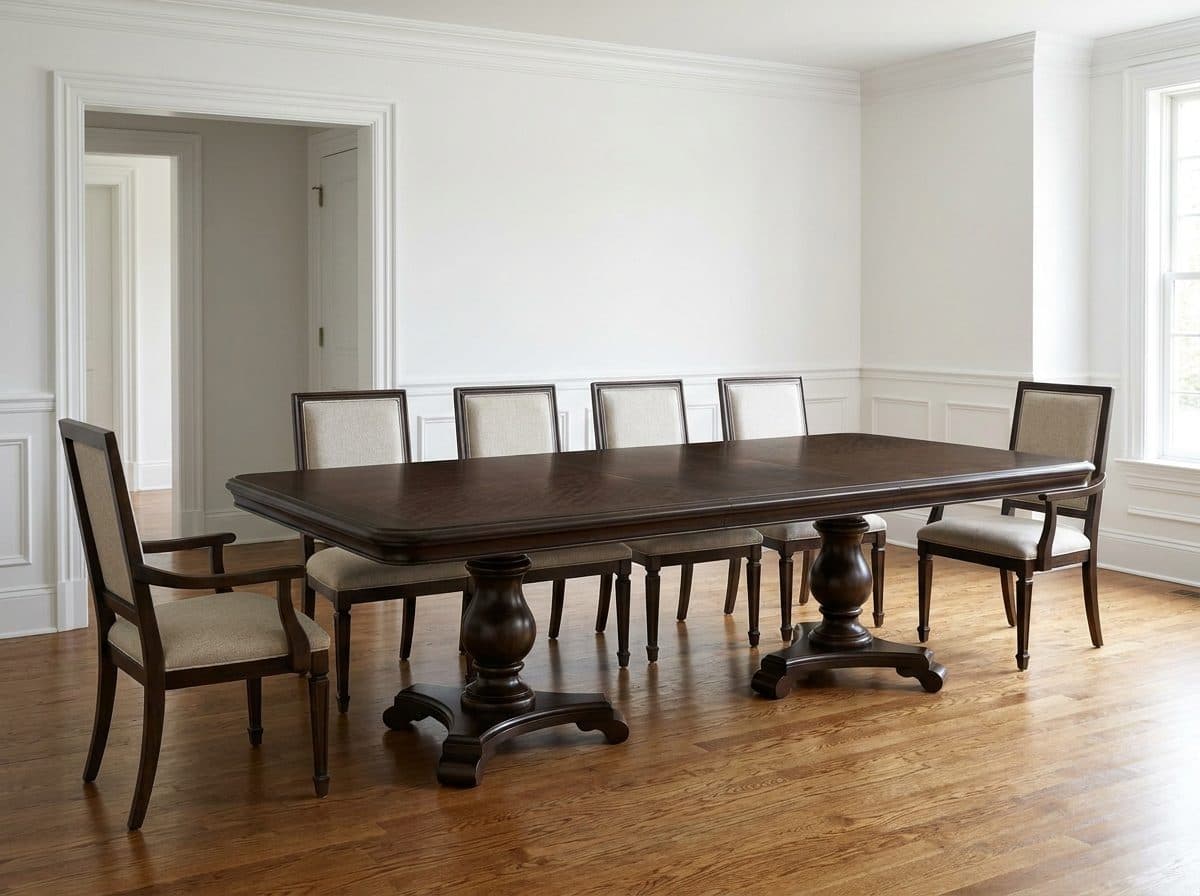
A client came to us with a clear ask: a 7ft × 7ft square dining table in moabi pommelle with an espresso stain. Big square tables have real appeal — nobody sits at a "head," everyone faces everyone, and a 7-foot square in a figured African hardwood is unapologetically a statement. But the dining room was 13ft × 11ft, and that changes everything. Here's how we worked through it — the same math and trade-offs we walk through on any oversized commission, with concept renders at every step.
Is a 7×7 Dining Table Feasible?
Buildable? Absolutely. Practical in this room? Run two numbers:
- Along the 13' wall: (13' − 7') ÷ 2 = 36" per side — the bare minimum to seat a person and squeeze behind them.
- Along the 11' wall: (11' − 7') ÷ 2 = 24" per side — a pulled-out chair alone needs about 36". Nobody can sit on those two sides at all.
So in this room, a "seats twelve" table functionally seats six, on two sides only. And there's a second problem no floor plan fixes: the center of a 7-foot square is 42 inches from every edge, and comfortable seated reach is 24"–30". You physically can't pass a dish across it. Add a top weighing roughly 450 lbs in 8/4 stock, and the honest answer to the client was: we can build it, and you'll regret it.
The working rules we use on every sizing conversation: 36" minimum from table edge to wall (or furniture) everywhere someone sits, 42"–48" where people walk behind seats, and 24" of table edge per person. Our table sizing cheat sheet covers the same logic for commercial rooms.
What Fits a 13×11 Room Instead
- 5'6" square — the largest square where all four sides actually work: 45" and 33" clearances, seats eight, and the center is reachable. If square is non-negotiable, this is the ceiling (6' with slim armless chairs, and guests will feel it).
- Big square + built-in bench — offset the table toward one wall and run a bench on that side; a bench needs no pull-out clearance, which buys back the stolen two feet.
- 8' × 5' rectangle — what the room's own proportions want: 30" at the ends, 36" on the sides, ten usable seats, and a 5-foot width you can actually pass food across. Nearly the seating of the 7×7, with every seat working.
The framing that settles it: the room seats people, not the table. In this room a 7×7 seats six awkwardly; an 8×5 seats ten comfortably. The client went with the 8×5.
Moabi Pommelle, and What Espresso Stain Does to Figure
Moabi is a dense African hardwood, and "pommelle" is the prize: a rippling, quilted figure that shimmers and shifts as you move around the piece — the same chatoyance that makes it one of the most sought-after veneer woods in the world. In solid form on a dining table, it's spectacular.
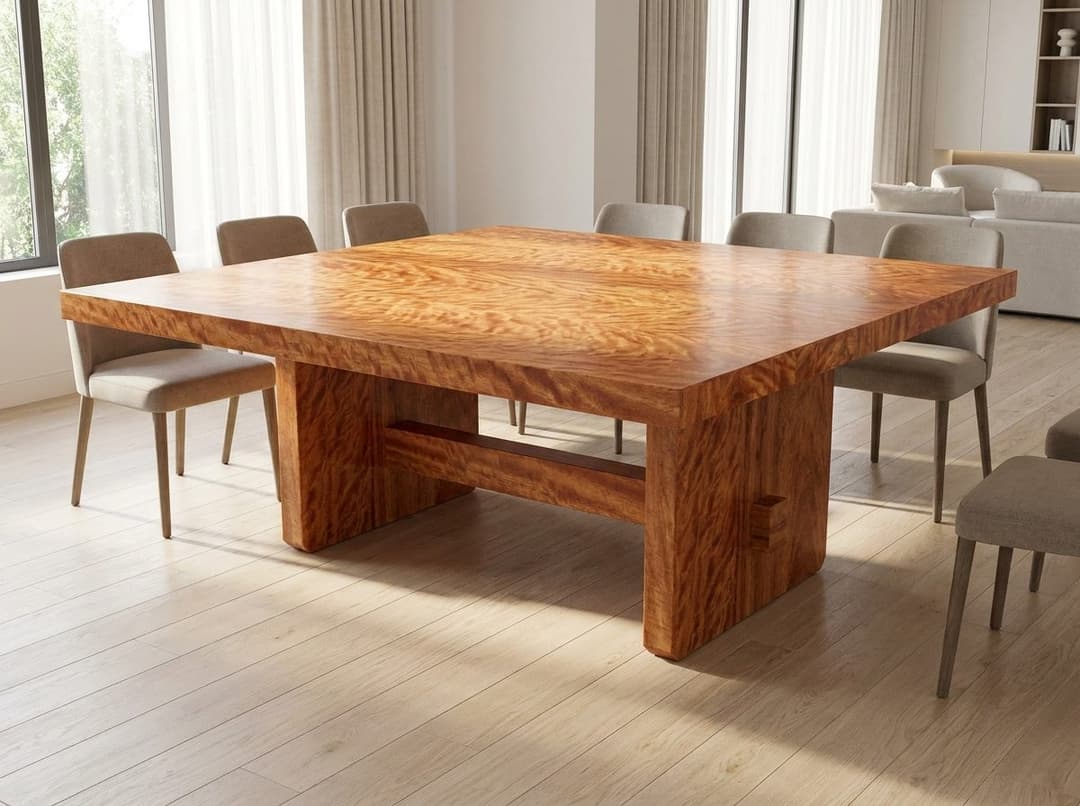
Concept render: the original 7×7 brief in natural moabi pommelle on a double trestle base.
The client wanted espresso. The trap with dark color over heavy figure is pigment stain — pigment sits in and on the surface and muddies the very shimmer you paid for. The answer is a dye stain (or dye followed by a light gel toner): dye colors the wood while staying transparent, so the quilted figure keeps moving under the dark finish. It's the same reasoning we walk through in stained vs. natural wood — and exactly why we insist on physical samples before committing a whole top. You can see the effect in the espresso concepts below: near-black in the shadows, and the figure still alive in the light.
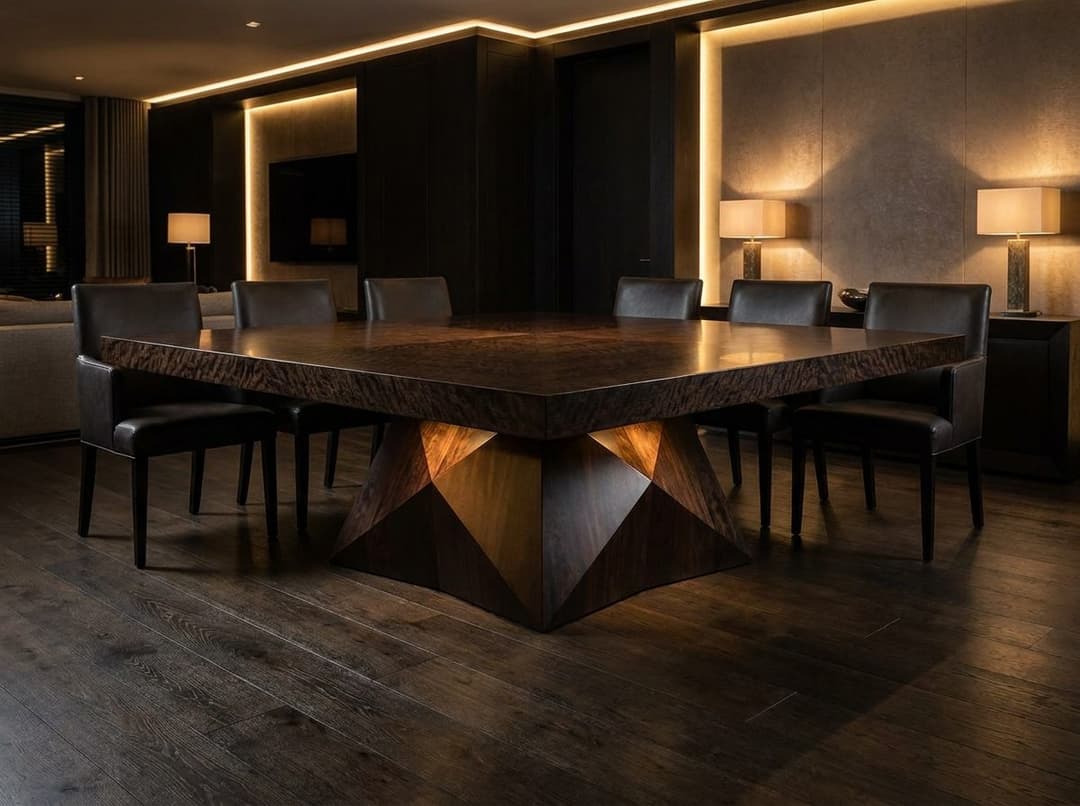
Concept render: espresso dye over pommelle figure — dark, with the quilt still glowing through.
Base Options From the Same Wood
Every concept we showed the client used the same moabi for the base — a table this figured shouldn't share the stage with metal. We explored three families:
Modern & CNC-driven
Slab-end trestles with CNC-cut windows, arched panel ends, and pierced lattice panels — designs where the CNC's precision is the detail. These are also the most practical builds: flat panels, clean toolpaths, knock-down hardware for delivery day.
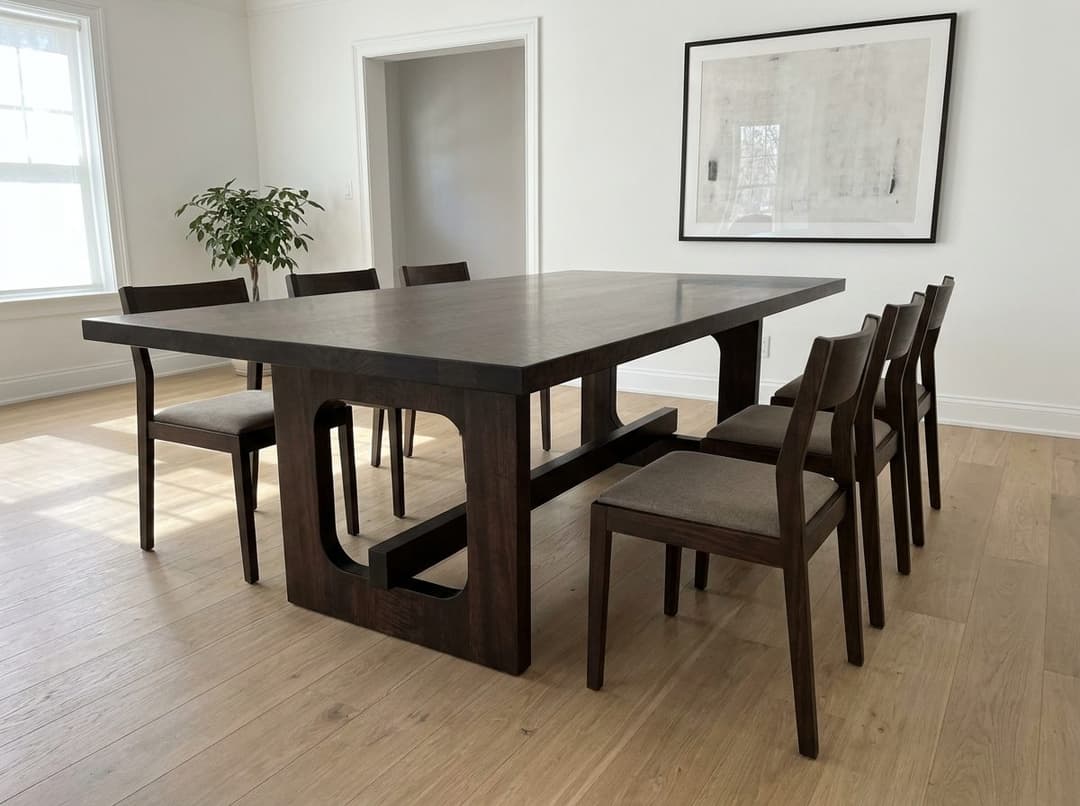
Concept render: the 8×5 on slab-end trestles with a CNC-cut window, staged at the room's real proportions.
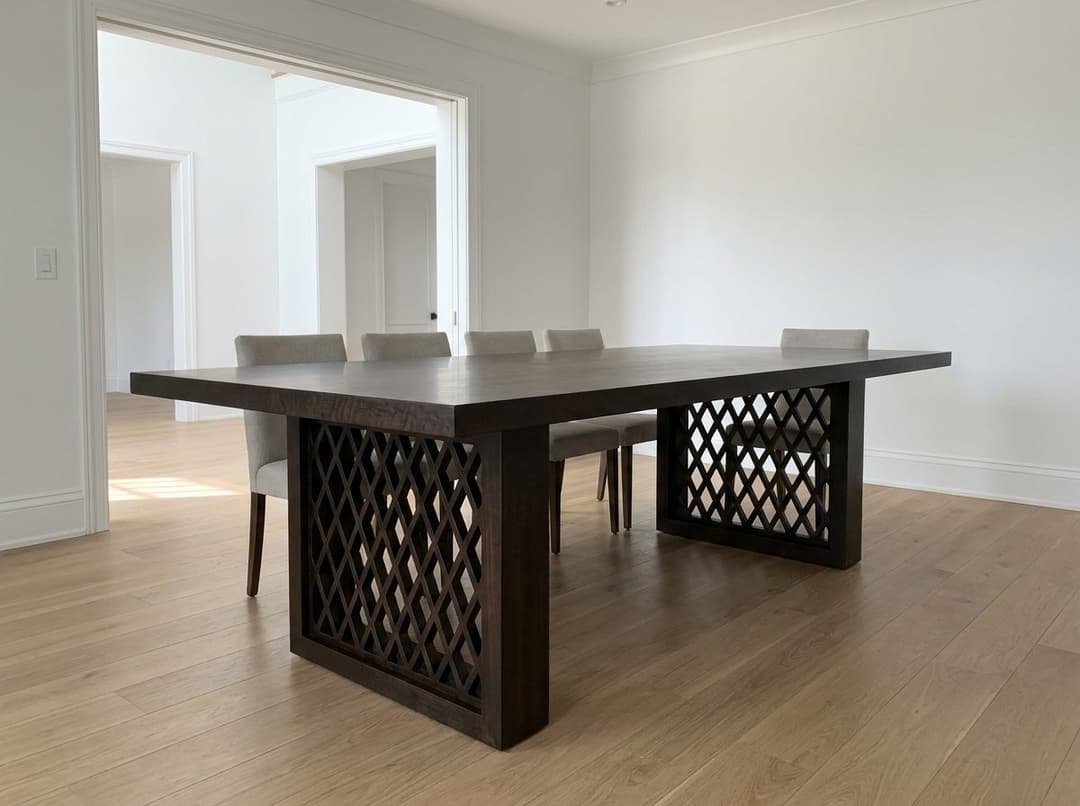
Concept render: diamond-lattice end panels — one nested CNC toolpath per side, reads as handwork.
Traditional
This client's home leans traditional, so the shortlist ended here: turned double pedestals, baluster and reeded legs, cabriole, and a refectory trestle — all in the same espresso moabi, with a classic ogee edge on the top.
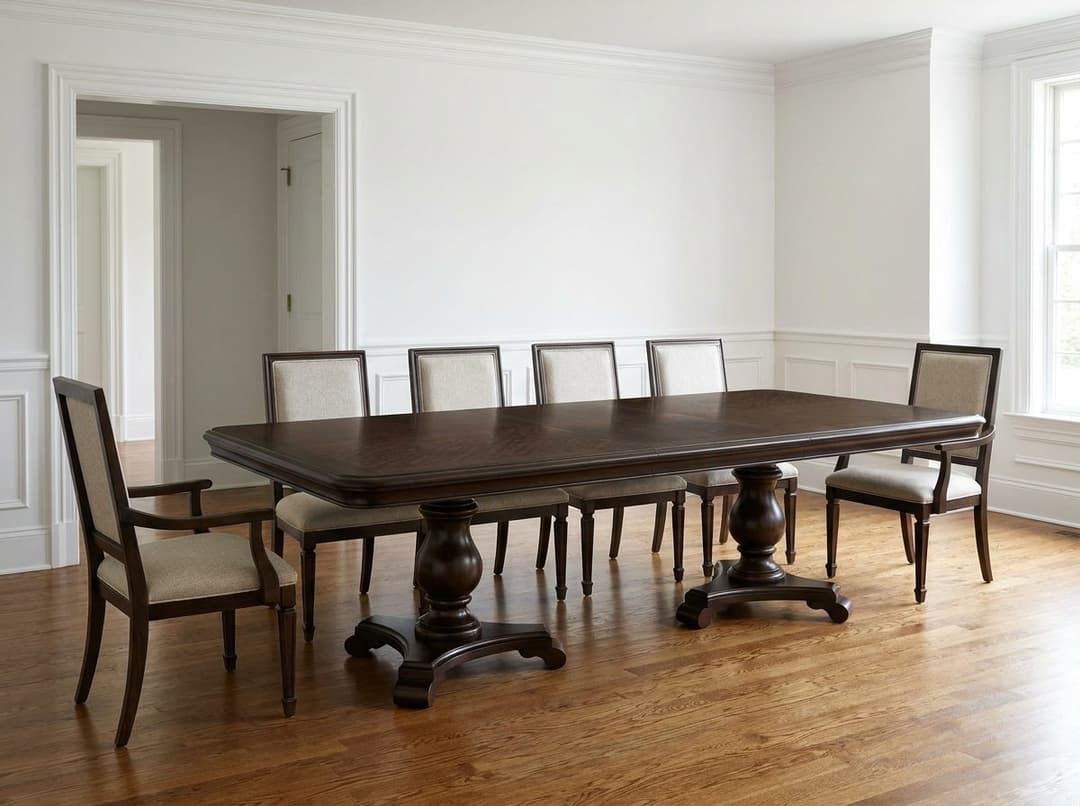
Concept render: the front-runner — twin turned pedestals, no legs at any seat, splits into three pieces for delivery.
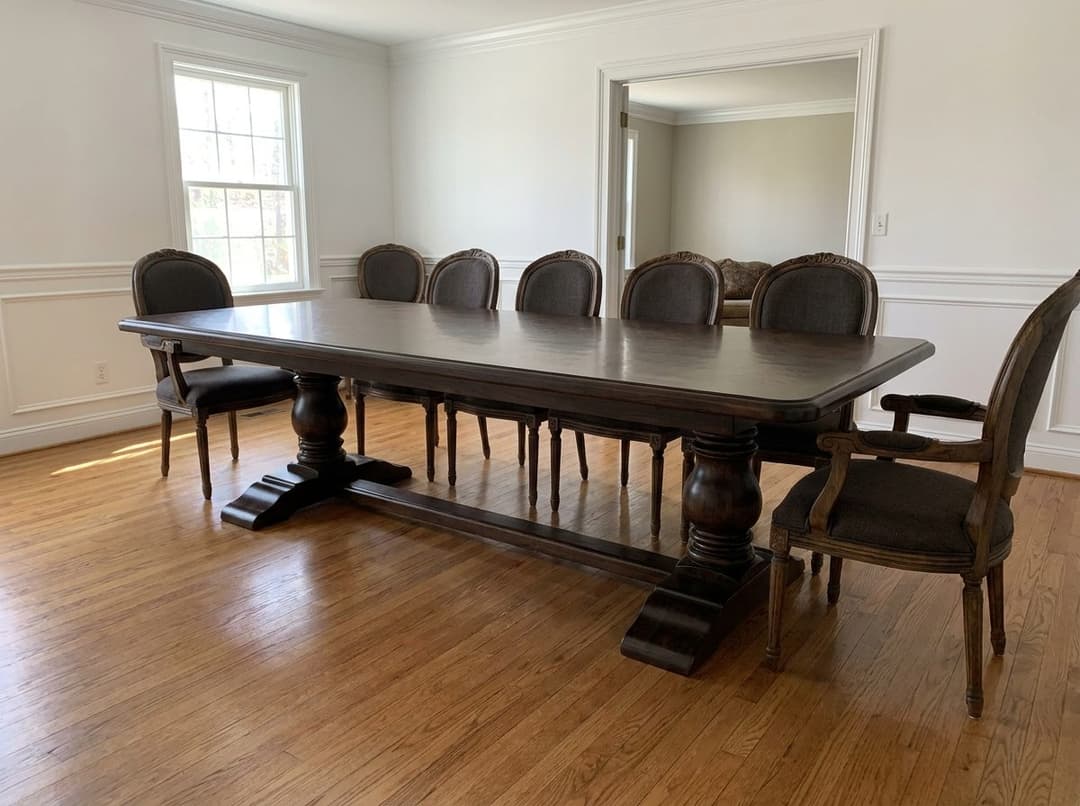
Concept render: the refectory alternative — old-world columns and a wedged through-tenon stretcher.
Why the double pedestal wins for this room: it reads unmistakably traditional, leaves every one of the ten seats leg-free, and the top, plus two pedestals, carry through a doorway as three manageable pieces instead of one 280-lb slab with legs attached.
Size to the Room, Then Make It Spectacular
Every oversized commission starts the same way: clearance math first, wow-factor second — because a table that doesn't let people sit isn't a dining table, it's an obstacle in figured hardwood. Once the size is right, the species, stain, and base carry all the drama you want. (The images in this post are concept renders we produced during the design conversation — it's how we let a client walk around ten different bases before we cut a single board.)
Working through the same decision? Our wood buyer's guide covers species, thickness, and edge choices in depth, dining tables can be priced at your exact size in the Builder, or send us your room dimensions and we'll run the clearance math with you.
dining table, cut to your dimensions.
Each one is milled from solid hardwood to your exact measurements and finished by hand in our Farmingdale shop.
Design yours →Kevin has been designing and building made-to-order solid hardwood countertops, table tops, and shelving in Farmingdale, NY since 2017 — every piece milled and finished in the Hardtwood shop.
More about the shop →