

Wooden Table Top: What to Know Before You Buy One
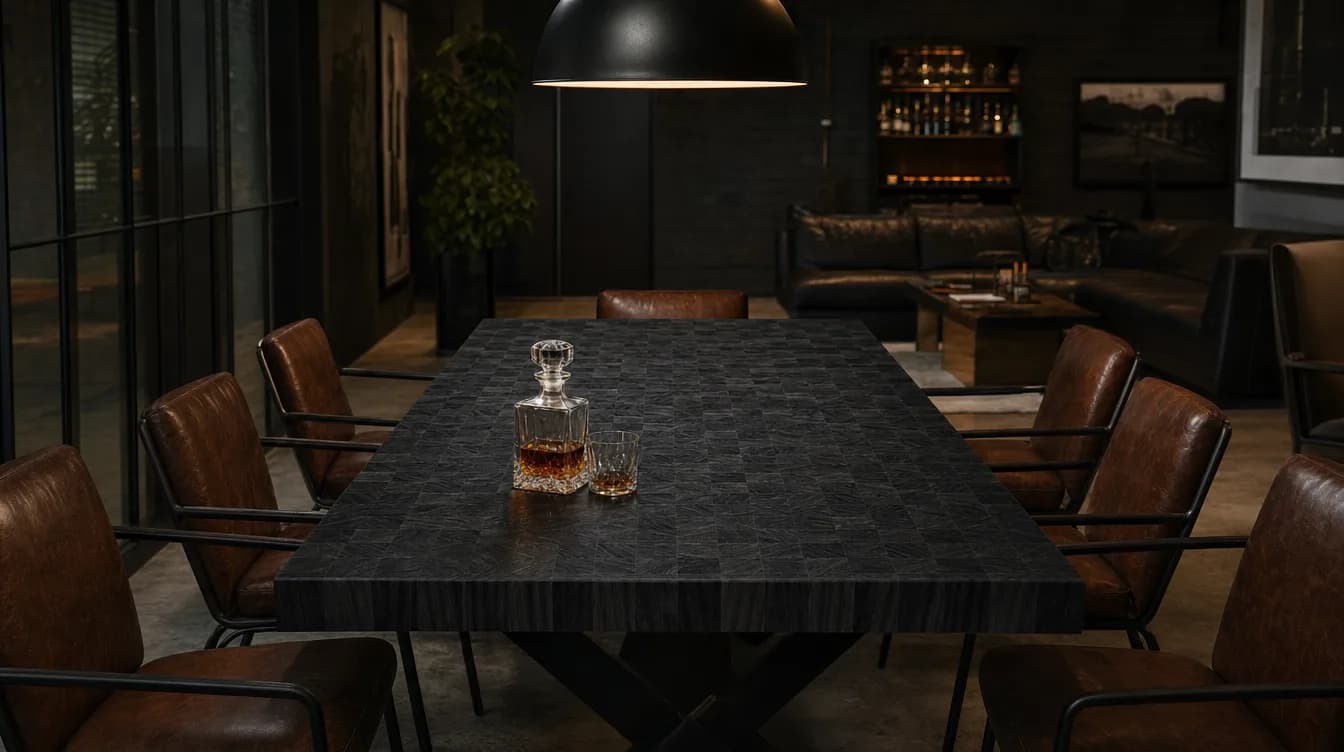
Most searches for "wooden table top" land on one of two things: a veneered panel from a big-box store, or a solid board of hardwood built to outlast the house it sits in. We only make the second kind, in the Farmingdale, NY shop. If you want a real piece of wood — not plywood with a wood-grain sticker — here's what actually matters, in the order the decisions come up.
Solid Wood vs. Veneer — and Why It's Not Close
A veneered top is a thin skin of real wood glued to particleboard or MDF. It looks fine in photos. It doesn't take a scratch well, it can't be refinished more than once, and if water gets under an edge, the core swells and it's done. A solid hardwood top is full-thickness wood straight through: refinishable for decades, repairable in place, and better looking at year ten than day one.
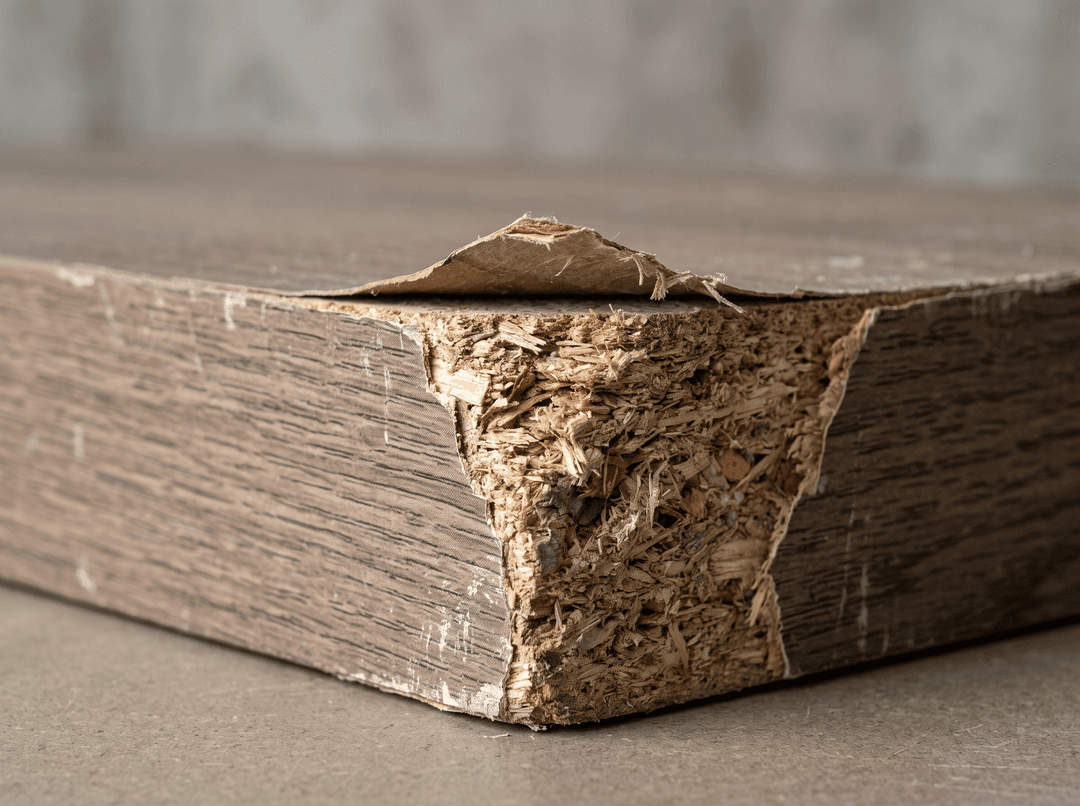
The corner tells the truth: veneer over compressed sawdust, already letting go.
Species Changes How the Top Behaves
- Walnut — dark, rich, the premium look; softer (about 1,000 Janka), so it patinas rather than staying pristine.
- White Oak — strong grain figure, very durable (1,360), takes stain evenly; the modern workhorse.
- Hard Maple — densest domestic staple (1,450), stays pale unless stained; the dent-resister.
- Cherry — starts light and deepens noticeably through the first year of sun.
Species also moves weight, cost, and seasonal movement. Every wood we mill is compared with Janka ratings on the materials page, with deep dives per species — start with the walnut guide if you're torn.
Construction: Face, Edge, or End Grain
Wide boards laid flat (face grain) show the most figure — the furniture look. Strips on edge (edge grain) make the stiffest, most stable panel for long spans. Blocks on end (end grain) are for tops that take direct knife work. The full comparison, with costs, is in edge grain, end grain, or two-tone — and if the top is for a restaurant floor, the commercial specs are on the restaurant tabletops page.
Thickness and Edge Profile Aren't Just Looks
Most dining and desk tops we build run 1.5" to 2" thick. Thinner reads flimsy no matter how nice the wood; thicker is paying for weight you don't need unless the massive look is the point. Edge profile carries a lot of the character — an eased edge reads modern, a chunky bullnose traditional, an ogee formal, and a live edge keeps an organic line no two tops repeat. The profiles are illustrated on the edge detail guide; decide early, because the edge and the base need to agree.
Wood Movement Is Real
Solid wood expands and contracts across the grain with the seasons. A top glued up wrong, or bolted rigidly to its base, cracks — sometimes in the first winter. Proper board selection, grain orientation, and hardware that lets the top float are non-negotiable, and on wide spans we let steel C-channel into the underside ($100 per foot of width, invisible from above). This is the difference between furniture built to last and furniture built to look good in a showroom for six months.
What a Custom Top Actually Costs
Price moves with species, dimensions, thickness, and edge detail. At the standard 1.5", finished and freighted: white oak runs $80–$100 per square foot, maple $85–$105, walnut $90–$110 — so a 72 × 36 dining top starts in the low thousands, and a large live edge walnut slab runs higher. Ranges by species are on the pricing page; the Builder prices your exact top live, no email required.
Built for Your Space, Not a Shelf
Every top is sized to the quarter inch for the table, desk, or counter it's going on. Current lead time is 4-6 weeks, and every piece ships crated, nationwide. Enter your dimensions in the Builder and watch the price update as you spec — or see one built first: our walnut face grain table tops are exactly the build this guide describes.
table top, cut to your dimensions.
Each one is milled from solid hardwood to your exact measurements and finished by hand in our Farmingdale shop.
Design yours →Kevin has been designing and building made-to-order solid hardwood countertops, table tops, and shelving in Farmingdale, NY since 2017 — every piece milled and finished in the Hardtwood shop.
More about the shop →