

What Is a Butcher Block Table?
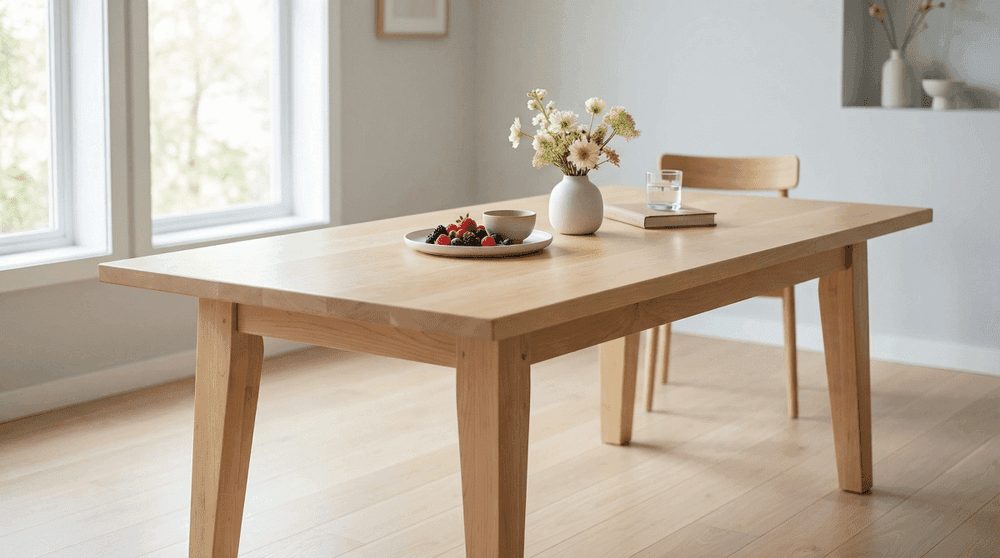
A butcher block table is a solid hardwood top built from strips of wood glued together — never cut from a single wide board, and never veneer over a core. The two real constructions, edge grain and end grain, behave very differently in daily use, and most of what sells under the "butcher block" name online is edge grain dressed up with end-grain marketing photos. We build both in the Farmingdale, NY shop, plus a two-species version, and each carries a trade-off worth knowing before you order.
Edge Grain, End Grain, or Two-Tone: Which Should You Buy?
These aren't interchangeable. Here's what each one gives you:
- Edge grain — long boards glued side by side, grain running the length of the table. The most durable build for daily wear, the easiest to refinish, and the most affordable of the three. Best for dining tables and working counters where you want clean linear grain.
- End grain — blocks stood on end so you're looking into the fibers: the classic checkerboard. Self-healing under a blade, but it shows water rings faster and asks for more attention at the finish. Best for prep-heavy islands and chef's tables that take real knife work.
- Two-species stripes — walnut and white oak (or maple and walnut) alternating strip for strip in edge grain construction. Zero durability trade-off versus single-species edge grain; the contrast is the whole point. It's the option we get the most trade and design-firm inquiries on.
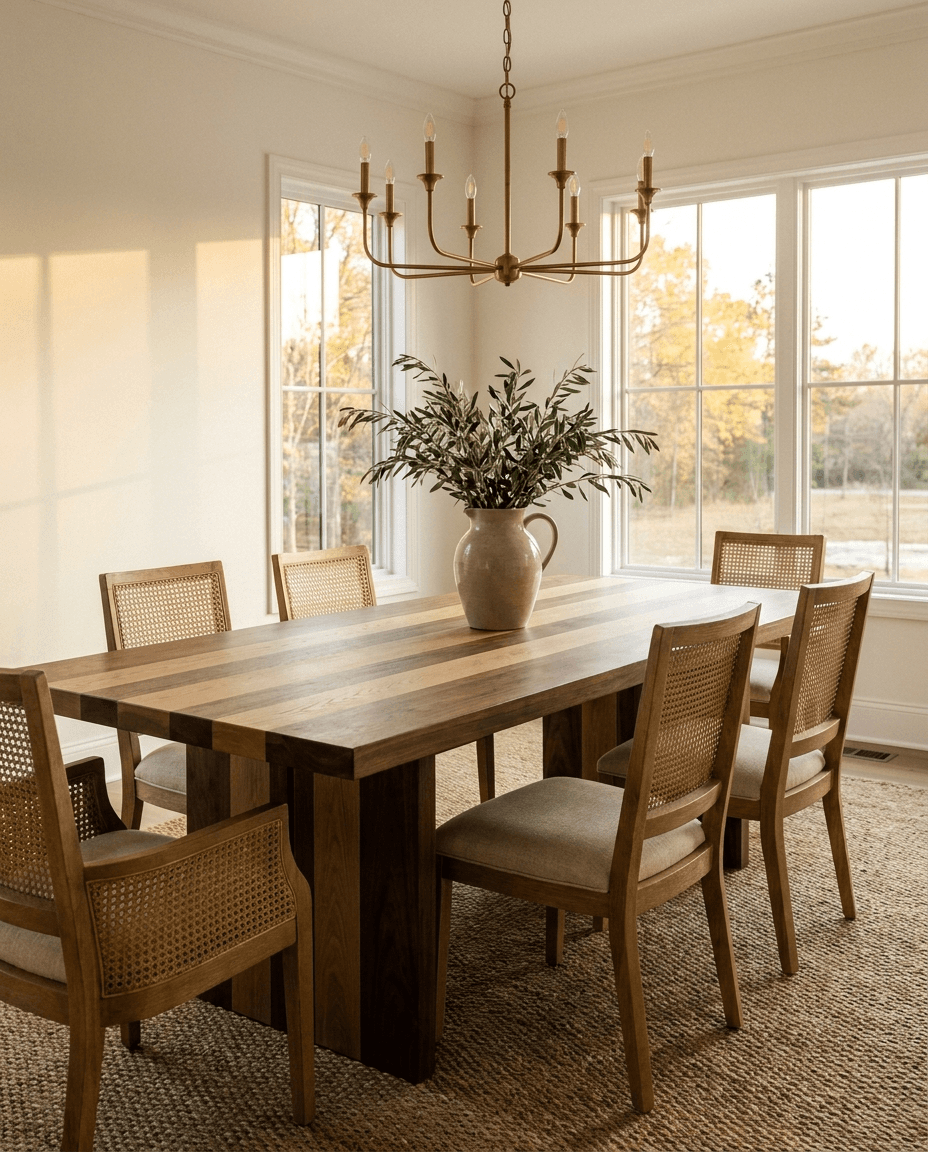
Walnut + white oak, striped through the glue-up — edge grain construction, two-species color.
The full construction decision, with photos of each build, is in the edge grain vs. end grain comparison and the butcher block countertop guide.
How Thick Should a Butcher Block Table Top Be?
1.5" is the standard for a residential dining table and holds up fine under normal use — it's also the thickness our per-square-foot prices are quoted at. For a table that takes heavy daily knife work or commercial traffic — a restaurant communal table, a bar top, a chef's prep table — we build 2" to 3" so the top can be sanded and re-oiled for decades without thinning out. Under 1.25" a wide top starts to feel light and can cup across the span without breadboard ends or steel C-channel let into the underside ($100 per foot of width, invisible from above).
Is End Grain More Durable Than Edge Grain?
Against knife cuts, yes — end grain absorbs the blade between its fibers instead of scarring across the surface, then closes back up with oil. Against everything else — spills, general wear, hot dishes on trivets — edge grain wins, because it seals more evenly and doesn't expose pore structure at every joint. If the table is mostly for eating, edge grain is the more honest choice. If it's a working prep surface, end grain earns its reputation — plan on re-oiling the work zone as it wears.
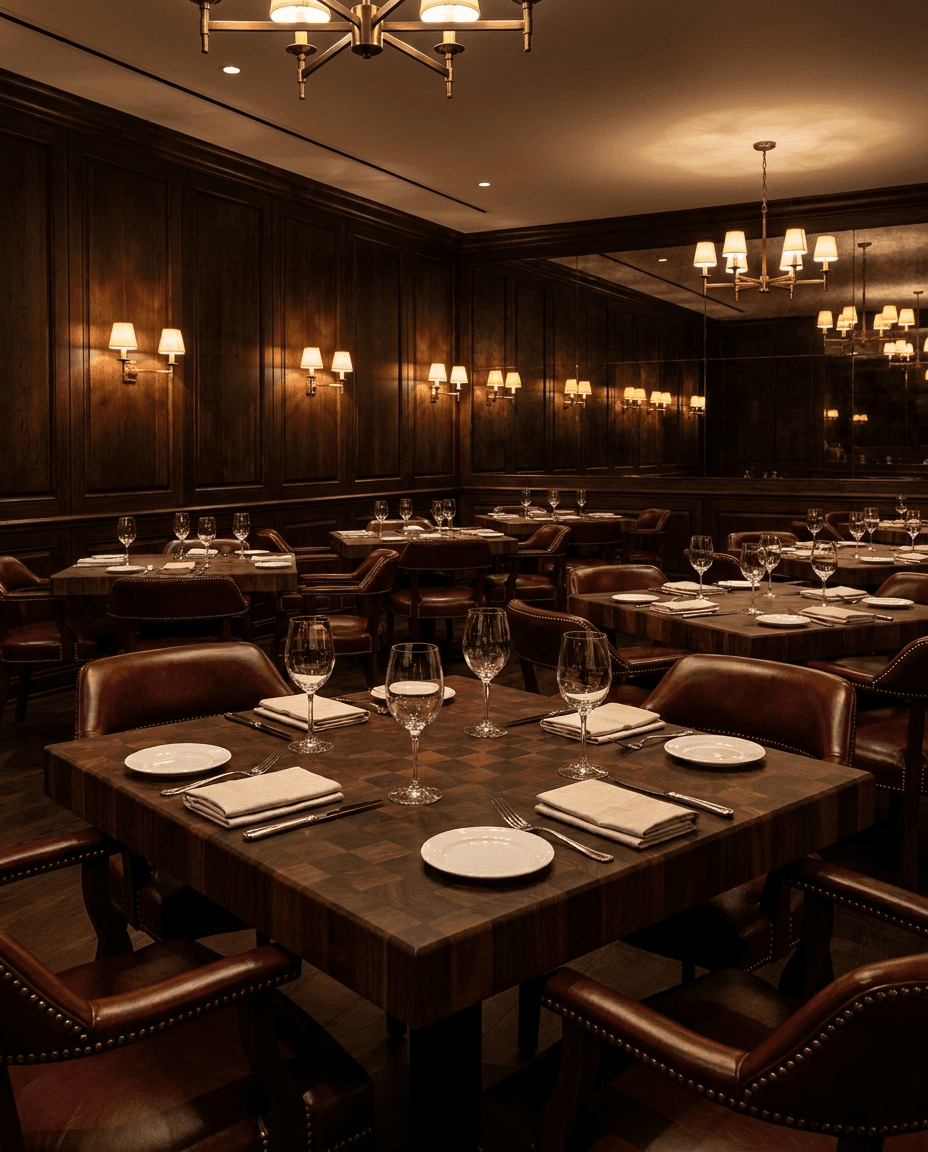
End grain walnut in service — the checkerboard reads as luxury on a steakhouse floor and works as a surface.
Is Butcher Block Food-Safe for Cutting Directly on the Table?
Yes, with the right finish. Every top we ship is sealed with a 100% VOC-free, food-contact-safe hardwax oil, UV-cured in the shop — the same finish on the walnut tabletops we built for Main Street Landing in DUMBO. What isn't food-safe is a polyurethane or lacquer film used as a cutting surface: the finish chips into food and the wood underneath can't self-seal. If a table is going to see real knife contact, we finish it accordingly and tell you so up front.
What a Solid Hardwood Butcher Block Table Costs
At the standard 1.5" thickness, a finished domestic-hardwood top runs roughly $80 to $110 per square foot delivered — maple at the value end, walnut at the premium end — with fabrication, the food-safe finish, and lift-gate freight included. Edge grain prices about 20 percent above face grain for the extra rip cuts and glue-up; end grain runs about 50 percent above face grain, and a 3" end grain commercial top climbs from there on material volume alone. Two-species stripes land in the same range as single-species edge grain. Exotics like wenge or Macassar ebony move every number up. Per-species rates are on the pricing page, and the Builder shows the exact figure for your dimensions before you give us an email address.
How Long a Custom Top Takes
Current lead time is 4-6 weeks from order confirmation. End grain adds glue-up time — it's built in smaller sections and clamped in stages — and details like breadboard ends, like the white oak banquette top we built in East Northport, add joinery time. Every top ships crated on a pallet with lift-gate delivery included in the continental US.
Spec Yours in the Builder
Pick the species, choose edge or end grain, enter length, width, and thickness, and the Builder prices the top live. See the two-species build first: our walnut and white oak edge grain table tops are milled to exactly the specs this guide recommends.
table top, cut to your dimensions.
Each one is milled from solid hardwood to your exact measurements and finished by hand in our Farmingdale shop.
Design yours →Kevin has been designing and building made-to-order solid hardwood countertops, table tops, and shelving in Farmingdale, NY since 2017 — every piece milled and finished in the Hardtwood shop.
More about the shop →