

Edge Grain vs End Grain Butcher Block: Which Should You Buy?
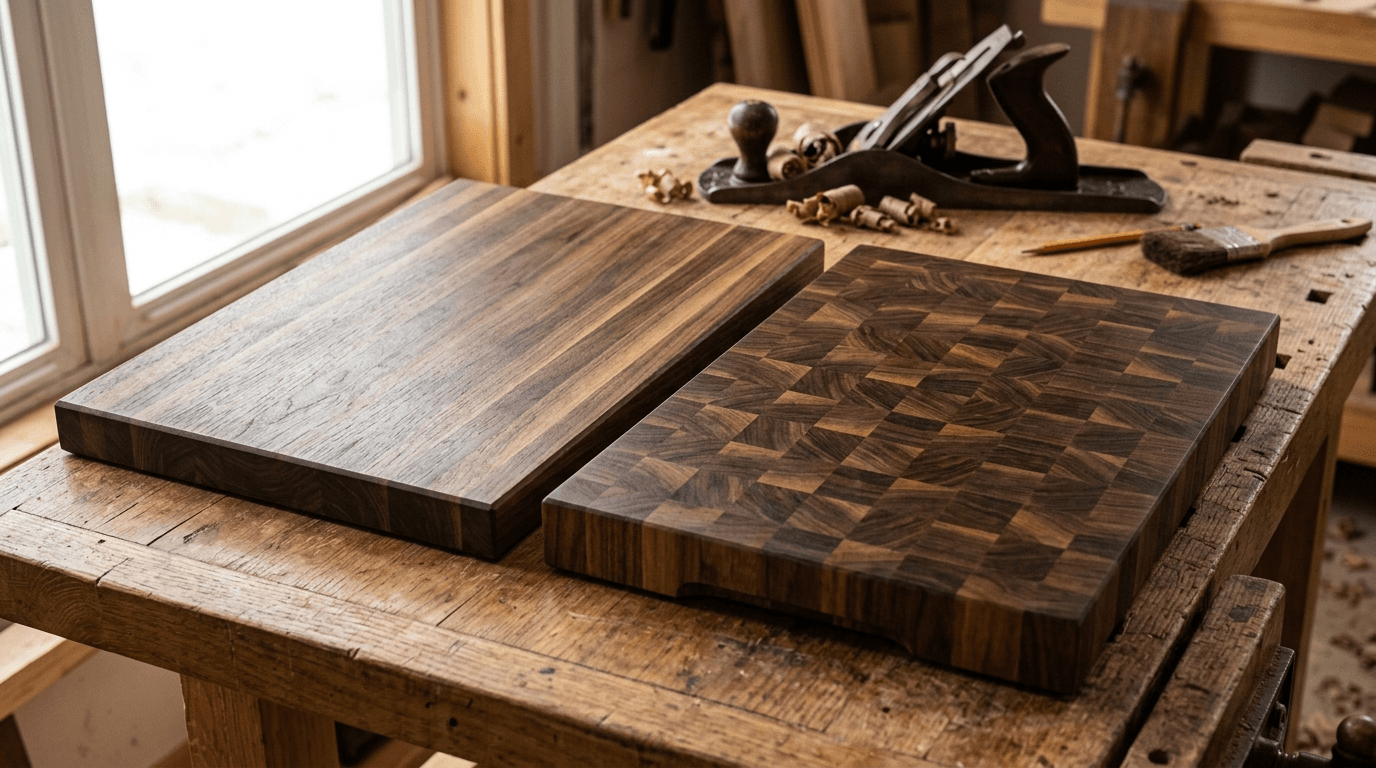
“Butcher block” covers two very different builds, and the right one depends on how you’ll actually use the surface. Both are solid hardwood glued into one plane — the difference is which face of the board looks up at you, and that one choice moves the durability, the care, and the price. We mill both every week in the Farmingdale, NY shop; here’s the honest comparison.
Edge Grain: the Working Counter
Edge grain stands boards on their long, narrow edge and glues them into parallel strips — the classic butcher block stripe. Because the edge of a board is denser and more dimensionally stable than its face, an edge grain top resists dents, cupping, and seasonal movement better than a wide-plank top, at a price well below end grain — about 20 percent over face grain, which puts a finished 1.5" top at roughly $80–$110 per square foot by species, freight and food-safe finish included. It’s the construction we recommend for kitchen counters, islands, desks, and workbenches: durable, calm to look at, easy to refinish in place.
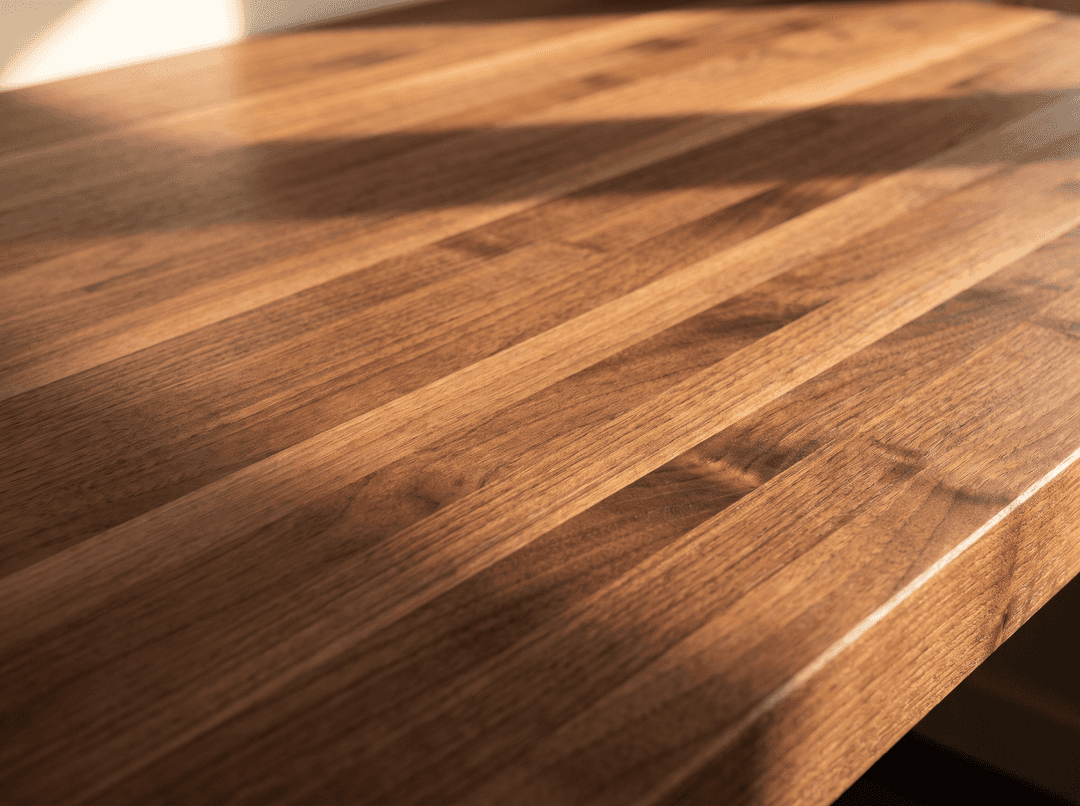
Edge grain up close: the stripe pattern is the board edges, glued into one stable panel.
End Grain: the Cutting Surface
End grain turns the boards vertical so the cut ends face up, glued into the checkerboard you know from serious butcher shops. The fibers stand like a brush: a knife slips between them instead of severing them, which keeps edges sharp and lets the surface self-heal with oil. It’s the premium choice for a chopping station or a statement island — and it has to be thick. We mill end grain at 2.5" and up because the construction demands it, and that thickness plus hundreds of glued blocks is why it runs about 50 percent over face grain at the same footprint. The full ownership picture — what it demands at the sink, how the work zone re-oils — is in end grain butcher block: pros, cons, and care.
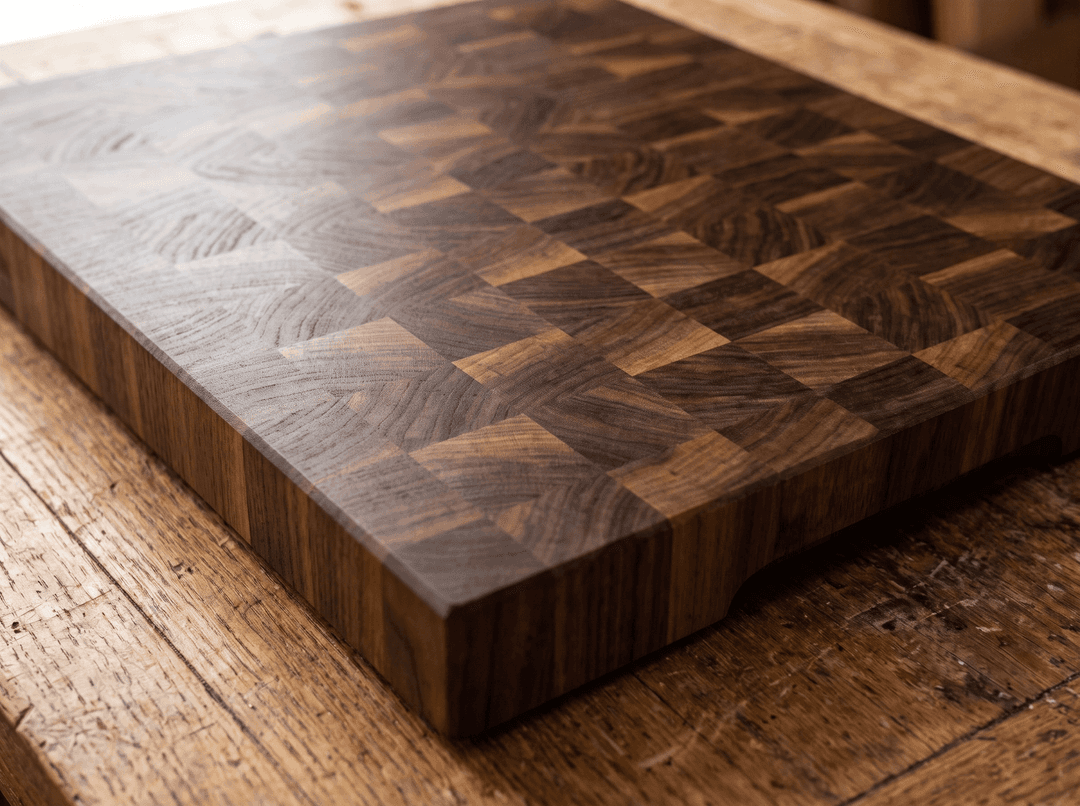
End grain: every square is a block’s upturned fibers — the knife lands between them.
The Two Builds, Honestly Compared
| Edge grain | End grain | |
|---|---|---|
| Knife work | Use a board | Made for it — self-heals |
| Stability | Best across long runs | Very stable, wants thicker stock |
| Thickness | 1.5"–2" typical | 2.5"–6" |
| Cost vs face grain | about +20% | about +50% |
| Care | Yearly refresh coat in work zones | Re-oil the chopping zone as it wears |
| Water | Forgiving | Splashes yes, puddles no |
Match the Build to the Job
- Daily prep counter, island, bar, desk: edge grain — durability per dollar is unbeatable.
- Dedicated cutting surface or showpiece island: end grain — kindest to knives, unmistakable look.
- Want the wide, seamless plank look instead of stripes? That’s face grain — see the full construction comparison.
- Want two woods in one top? Walnut + white oak or maple + walnut stripe through either build — the two-species story is in the butcher block countertop guide.
Species is the second decision: hard maple is the butcher block classic — the maple deep-dive covers hard vs. soft maple and real pricing — while walnut is the premium pick, covered in walnut butcher block countertops.
Price Both in Two Minutes
All three constructions price live in the Builder, in any of our fifteen species, finished food-safe and zero-VOC. Current lead time is 4-6 weeks, and every top ships crated with lift-gate freight included in the continental US. Weighing one against the other for a specific kitchen? Ask us — we mill both every week.
piece, cut to your dimensions.
Each one is milled from solid hardwood to your exact measurements and finished by hand in our Farmingdale shop.
Design yours →Kevin has been designing and building made-to-order solid hardwood countertops, table tops, and shelving in Farmingdale, NY since 2017 — every piece milled and finished in the Hardtwood shop.
More about the shop →