

Walnut Butcher Block Countertops: Edge Grain, End Grain, and What You're Actually Buying
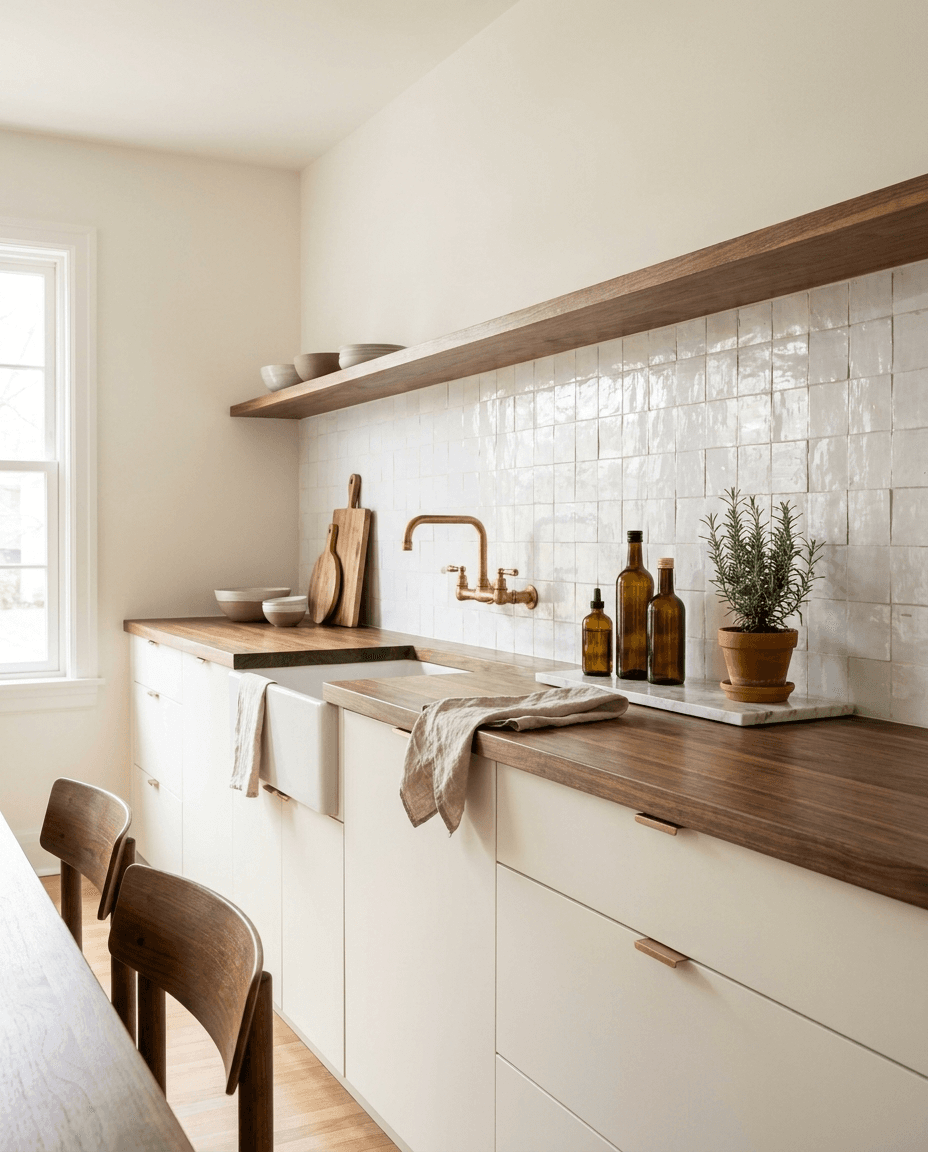
Most people searching "walnut butcher block countertop" are picturing a warm, dark-brown top — some picture long clean stripes, some picture the old-school checkerboard. Both are butcher block, and the difference between them changes the cost, the durability, and what the counter is actually for. Walnut works in every version; which one you want depends on how the counter will be used. Here's the honest breakdown, with the numbers.
"Butcher Block" Isn't a Look — It's a Construction
Butcher block means strips of solid hardwood laminated together; how the strips are oriented is what changes everything. Edge grain stands boards on edge for long parallel lines. End grain stands blocks on their ends for the checkerboard. Neither is veneer, and neither is a single wide plank — that's face grain, a different (beautiful) animal covered in the butcher block countertop guide.
Edge Grain Walnut
The most common and most affordable way to build a walnut counter: boards on edge, glued face to face, long straight grain running the length of the top. It's strong, dimensionally stable across a wide island, and shows walnut's color better than any other build. Most kitchen counters, bar tops, and vanities we build in walnut are edge grain — it prices about 20 percent over face grain for the extra rips and glue-up, which puts a finished top around $90–$110 per square foot at 1.5", freight and food-safe finish included.
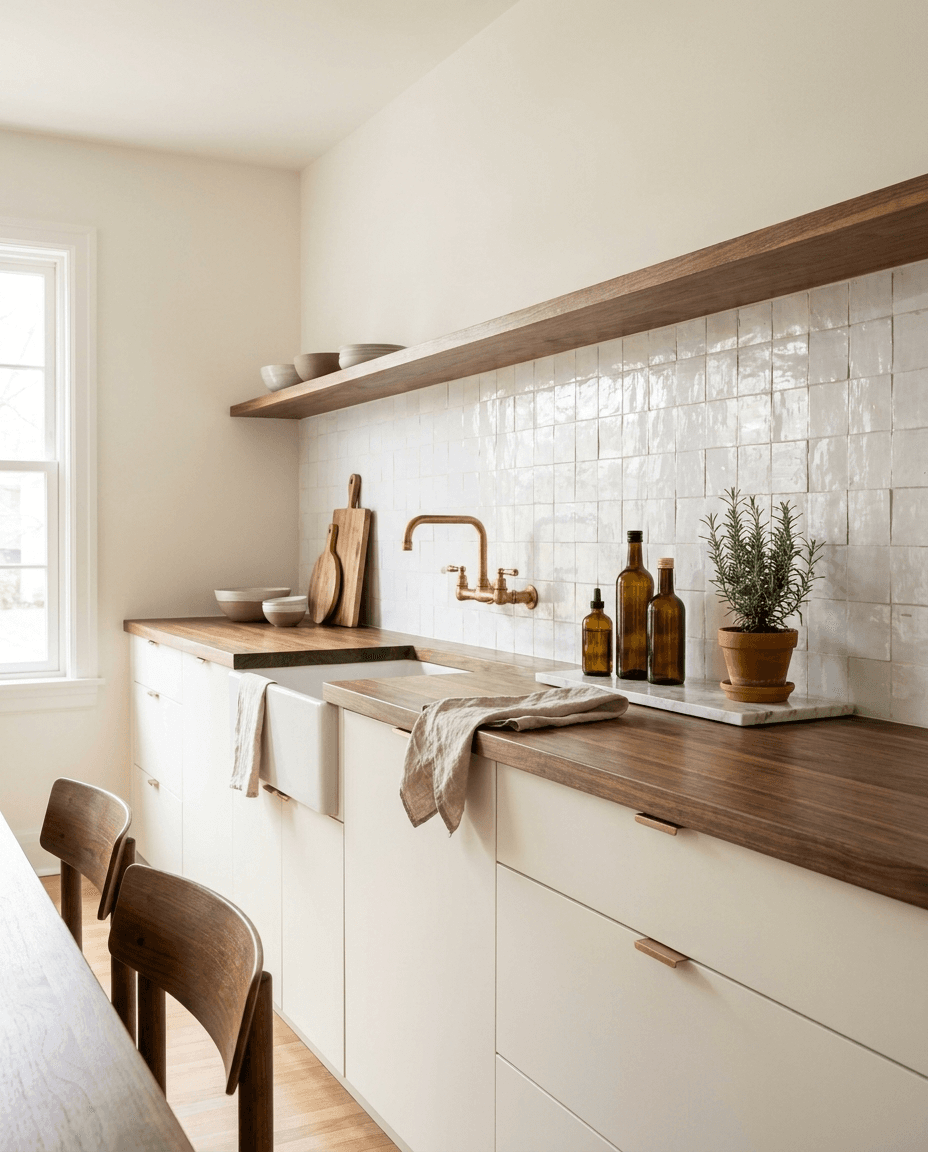
Edge grain walnut in service — the build most walnut kitchens actually want.
End Grain Walnut: True Butcher Block
The classic checkerboard, and the toughest surface we build. End grain absorbs knife marks instead of scarring, self-heals with oil, and is genuinely made to be cut on — if you want to chop directly on the counter, this is the actual product, not just the look. Every block is cross-cut and re-glued, so it runs about 50 percent over face grain and starts at 2.5" thick because the construction demands it. The full pros-and-cons ledger is in end grain butcher block: pros, cons, and care.
Walnut + White Oak: the Two-Species Top
This is where we see the most designer interest and where almost nobody builds made-to-order: walnut paired with white oak in alternating strips. The contrast does something a single species can't — it reads as a design decision, not just a material. Structurally it's the same edge grain lamination, alternating species; walnut and white oak move similarly enough to pair safely, but the layout and joinery matter more than on a single-species top — this isn't a DIY glue-up. We've built them for kitchen islands, restaurant bars, and conference tables; the made-to-size product is maple + walnut and its sibling pairings in the countertop collection.
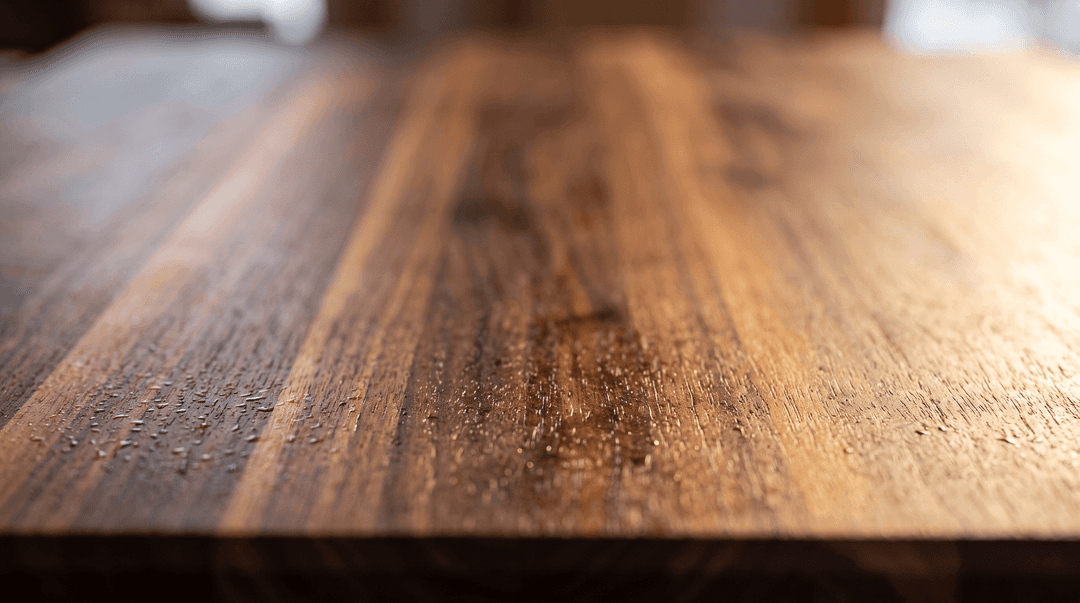
Walnut under the hardwax oil — the finish is food-safe, water-beading, and repairable in place.
Where Walnut Actually Performs
Walnut is softer than maple or white oak — about 1,000 lbf on the Janka scale against 1,450 and 1,360. That's part of its charm: it dents and patinas rather than staying showroom-perfect. For a home kitchen island with normal use, walnut edge grain is a great call. For a high-traffic restaurant prep counter or bar, we usually steer toward walnut end grain, a walnut/white oak combo, or straight white oak. Species hardness and care differences are compared on the materials page and the walnut species guide; if the palest, hardest domestic is the goal, read maple butcher block countertops.
Restaurant and Commercial Builds
Specifying a bar top, host stand, or communal table? We work directly with GCs, designers, and owners on lead times, food-service-rated finishes, and sizing that accounts for seasonal movement in a commercial HVAC environment. End grain and combo tops both hold up in service when built right — undersized substrates and rushed glue-ups cause the failures, not the wood. Standard footprints, matched runs, and trade pricing live on the restaurant tabletops page.
Get a Real Number, Not a Guess
Walnut pricing moves with construction: edge grain around $90–$110 per square foot at 1.5", end grain and two-species tops higher on labor and yield. Current lead time is 4-6 weeks, and every top ships crated with lift-gate freight included. Baselines are on the pricing page; the Builder prices your exact walnut top — dimensions, construction, edge profile, cutouts — before you give us an email address.
White Oak countertop, cut to your dimensions.
Each one is milled from solid White Oak to your exact measurements and finished by hand in our Farmingdale shop.
Design yours →Kevin has been designing and building made-to-order solid hardwood countertops, table tops, and shelving in Farmingdale, NY since 2017 — every piece milled and finished in the Hardtwood shop.
More about the shop →