

Edge Grain vs. End Grain Countertops: Which Construction Is Right for Your Project
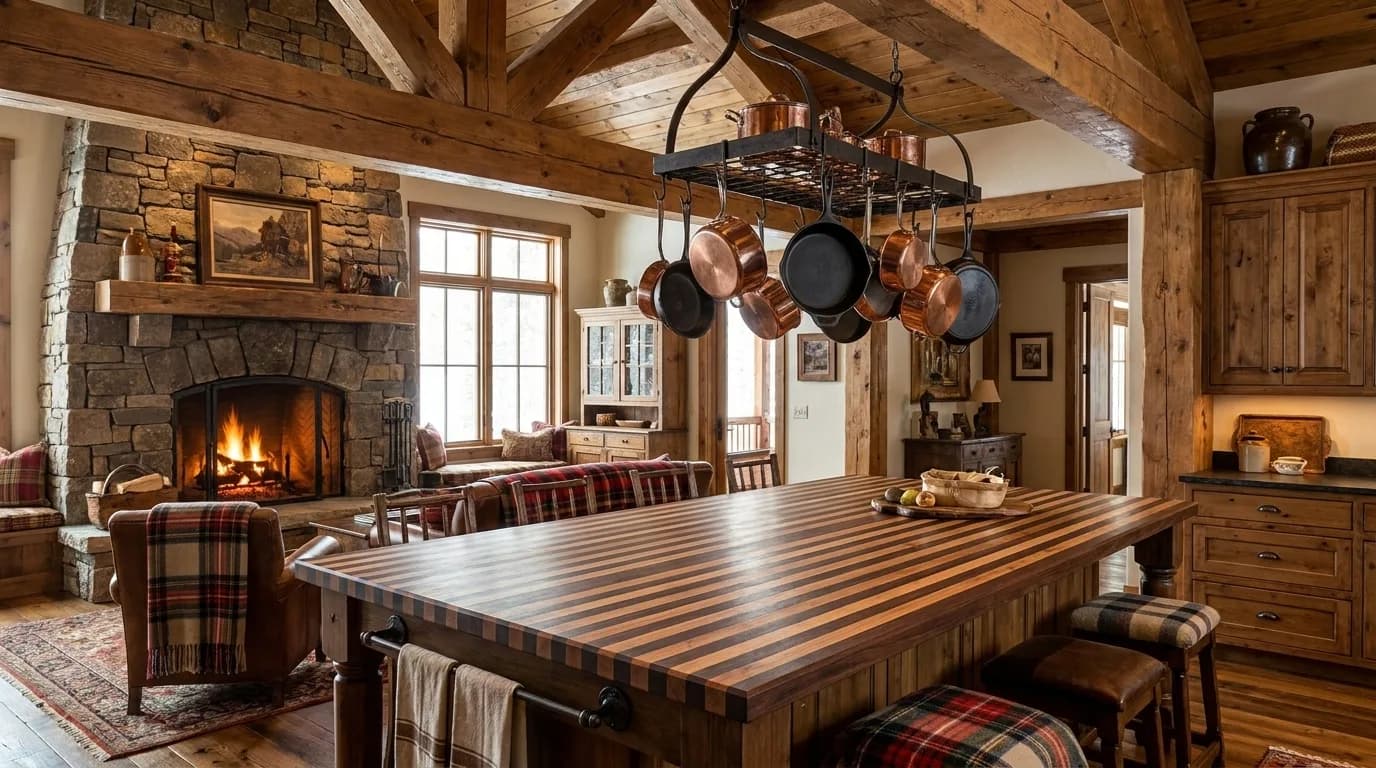
Edge grain is the stronger, more stable, better-looking choice for 90 percent of countertops — kitchen islands, bar tops, vanities, most dining tables. End grain, the true butcher block, is the right call when the surface takes direct knife work every day. Neither is "better" in a vacuum: they're built differently, they wear differently, and they solve different problems. Here's each one honestly, plus the two-species upgrade.
What Edge Grain Actually Is
Edge grain stands boards on edge and glues them face to face, so the surface shows long grain running the length of the top — clean linear lines, consistent color, no checkerboard. It's the strongest orientation for a flat panel: long grain resists cupping better than any other layup, which is why it's our default recommendation for kitchens and dining tables in the Builder. It's also the most forgiving to repair — a scratch or water mark sands out evenly with the grain, and the surface re-oils in place.
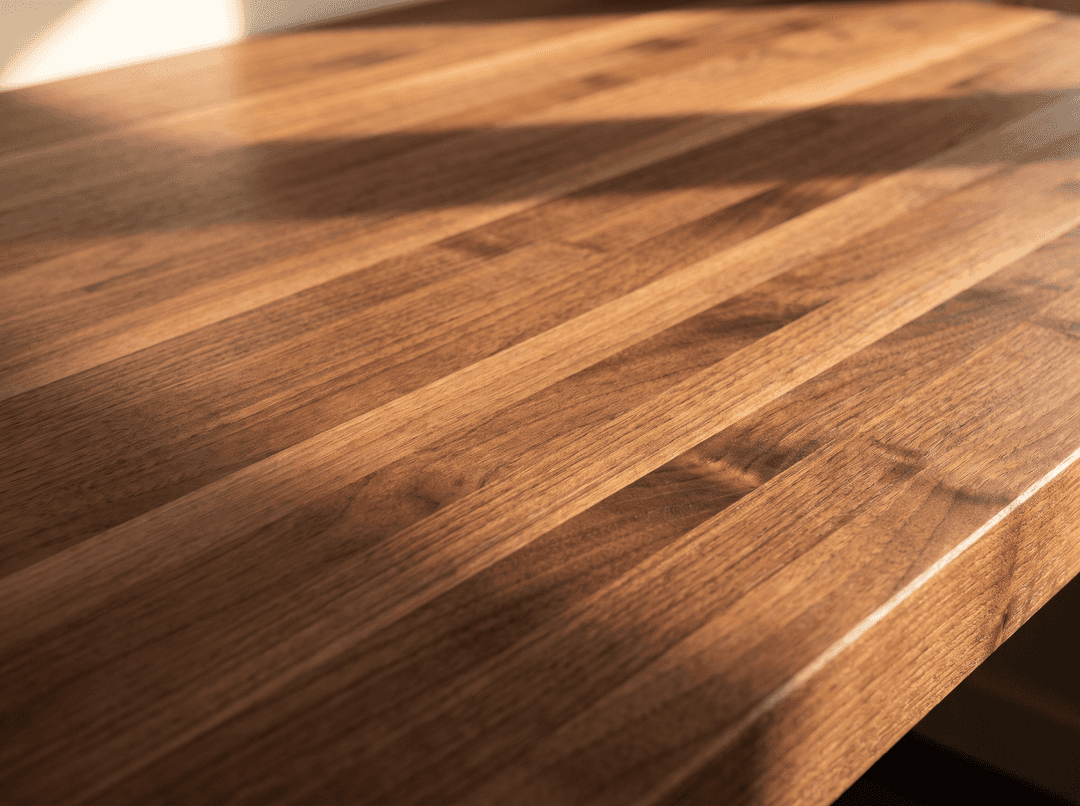
Edge grain: strips on edge, long grain up — the standard for working kitchens.
What End Grain Actually Is
End grain flips the orientation so you're looking at the cut ends of the fibers — the checkerboard. Structurally it's a different animal: kinder to knife edges, because fibers part around the blade and close back up instead of getting sliced across, and it self-heals minor cuts in a way edge grain never will. The trade-off is exposure — more open pore structure across the surface means it drinks finish faster and forgives splashes, not puddles. It wants thicker stock (we build end grain at 2.5" to 3" minimum, up to 6") and attention at the sink. The full ledger is in end grain butcher block: pros, cons, and care.
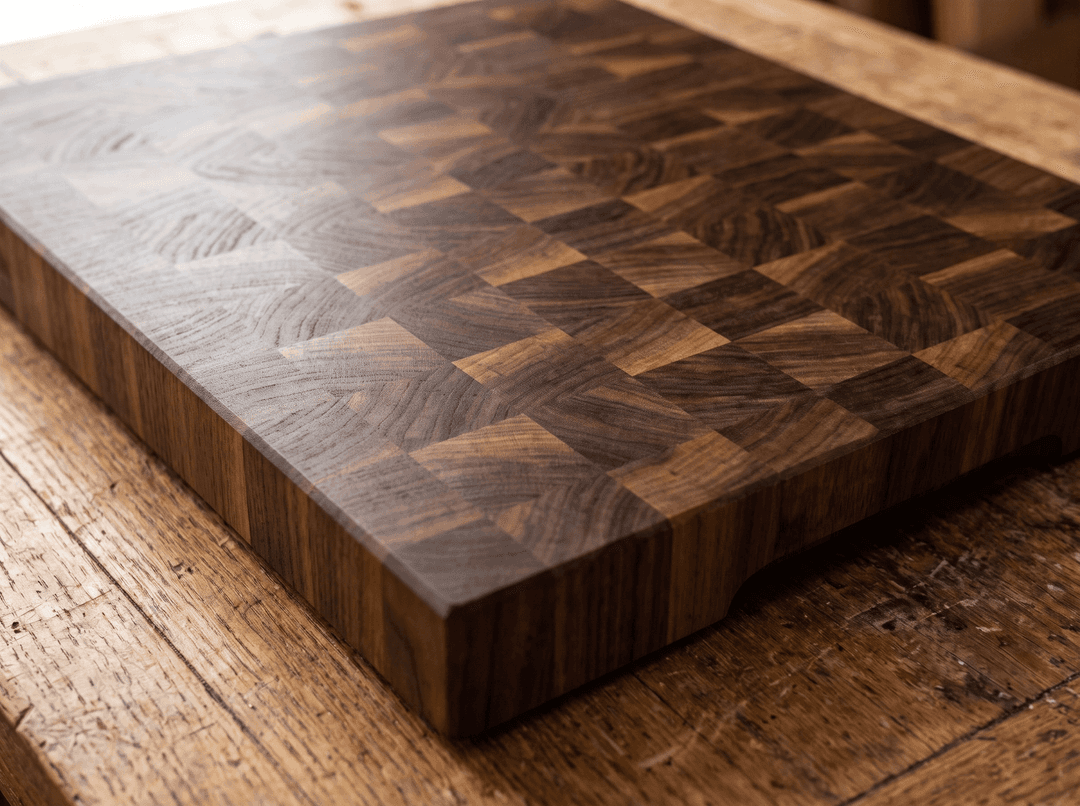
End grain: fibers up, blade between them — the only build made to be cut on.
Where Each One Actually Gets Used
- Residential kitchens: edge grain, almost always. It matches cabinetry sightlines, takes sinks and cooktops without excess movement, and doesn't demand a cutting-board maintenance routine.
- Restaurant and commercial prep: end grain earns its keep. Cooks cutting directly on the surface for hours a day is exactly what the construction was invented for — it's in a lot of our restaurant tables and back-of-house tops.
- Bars and dining tables: edge grain for the grain match across a long run; end grain only when the table doubles as an active work surface — chef's tables, communal prep islands.
Two-Species Tops: the Design Move
Once you've picked a construction, both can be built in two contrasting species — walnut and white oak is our most-requested pairing, maple and walnut right behind — as alternating stripes in edge grain or a checkerboard in end grain. It's not a gimmick: the contrast reads as intentional joinery, and it hits a palette without staining, because two-species tops ship natural — the wood-on-wood contrast is the color story. (Single-species tops absolutely can be stained; the palette is photographed on every wood at color swatches.) Combo tops cost more in layout time, planned board by board before glue-up; the payoff on a big island or a 10-foot restaurant table is significant. The made-to-size versions live in the countertop collection — start with maple + walnut edge grain.
How to Actually Decide
Ask what the surface does all day. Appliances, sinks, and normal kitchen life — edge grain. A knife, directly, hundreds of times a day — end grain. Want the statement and have budget for layout time — a two-species version of either. On cost: at the standard 1.5", figure white oak $80–$100 per square foot, maple $85–$105, walnut $90–$110, finished and freighted; edge grain runs about 20 percent over face grain, end grain about 50 percent. Current lead time is 4-6 weeks. The pricing page shows how each choice moves the number, the butcher block guide walks the whole decision with photos, and the Builder prices your exact top live.
countertop, cut to your dimensions.
Each one is milled from solid hardwood to your exact measurements and finished by hand in our Farmingdale shop.
Design yours →Kevin has been designing and building made-to-order solid hardwood countertops, table tops, and shelving in Farmingdale, NY since 2017 — every piece milled and finished in the Hardtwood shop.
More about the shop →