

Walnut Butcher Block Countertops: A Buyer’s Guide
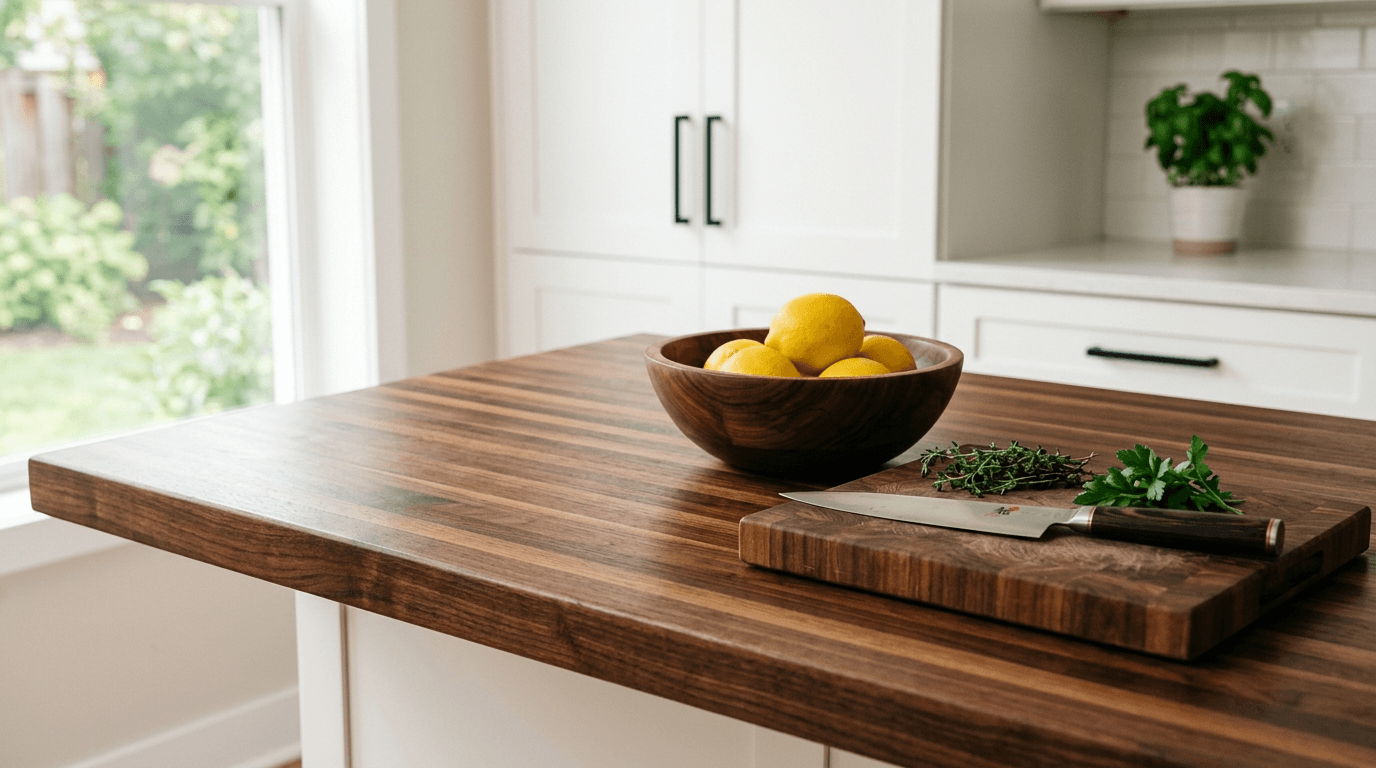
Walnut is the countertop wood people fall for on sight: deep chocolate browns, dramatic grain movement, and a warmth no stone can fake. Here’s what actually matters when you buy one as butcher block.
Edge grain or end grain?
Most walnut butcher block counters are edge grain — boards on edge, glued into long strips. It’s stable, durable, and shows walnut’s color as a rhythmic stripe. End grain turns the blocks vertical into a checkerboard: the knife-friendliest surface there is and a showstopper on an island, at a higher price and thickness. We compare the two honestly in our construction guide.
Thickness and span
For counters, 1.5” is the standard that reads substantial without overwhelming cabinets; islands and end grain want 2”–3”. We mill to the quarter inch, so overhangs, waterfall ends, and appliance gaps land exactly where your kitchen needs them.
Finish: food-safe or nothing
A walnut counter should be finished with a food-safe, zero-VOC hardwax oil — ours are, standard. It’s repairable in place: a scratch sands out and re-oils in minutes, which is the quiet superpower wood has over stone. Sealed correctly, walnut handles sinks and daily water fine; we cut for undermount sinks and stoves on request.
Is walnut durable enough?
Walnut runs about 1,010 lbf on the Janka scale — softer than maple, harder than pine, and plenty for a kitchen that treats it like furniture rather than an anvil. If you want maximum hardness with a light look, maple or white oak are the alternatives we steer people to; many kitchens mix walnut on the island with a harder species on the perimeter.
What it costs
Walnut sits at the premium end of our range, priced per board foot by your exact dimensions — no mystery tiers. Spec your top in the Builder and the price updates live as you type; our pricing page explains how the math works. Want to see the wood first? A $10 sample ships to your door.
Walnut countertop, cut to your dimensions.
Each one is milled from solid Walnut to your exact measurements and finished by hand in our Farmingdale shop.
Design yours →Kevin has been designing and building made-to-order solid hardwood countertops, table tops, and shelving in Farmingdale, NY since 2017 — every piece milled and finished in the Hardtwood shop.
More about the shop →