

How Much Do Wood Countertops Cost? Real Prices Per Square Foot
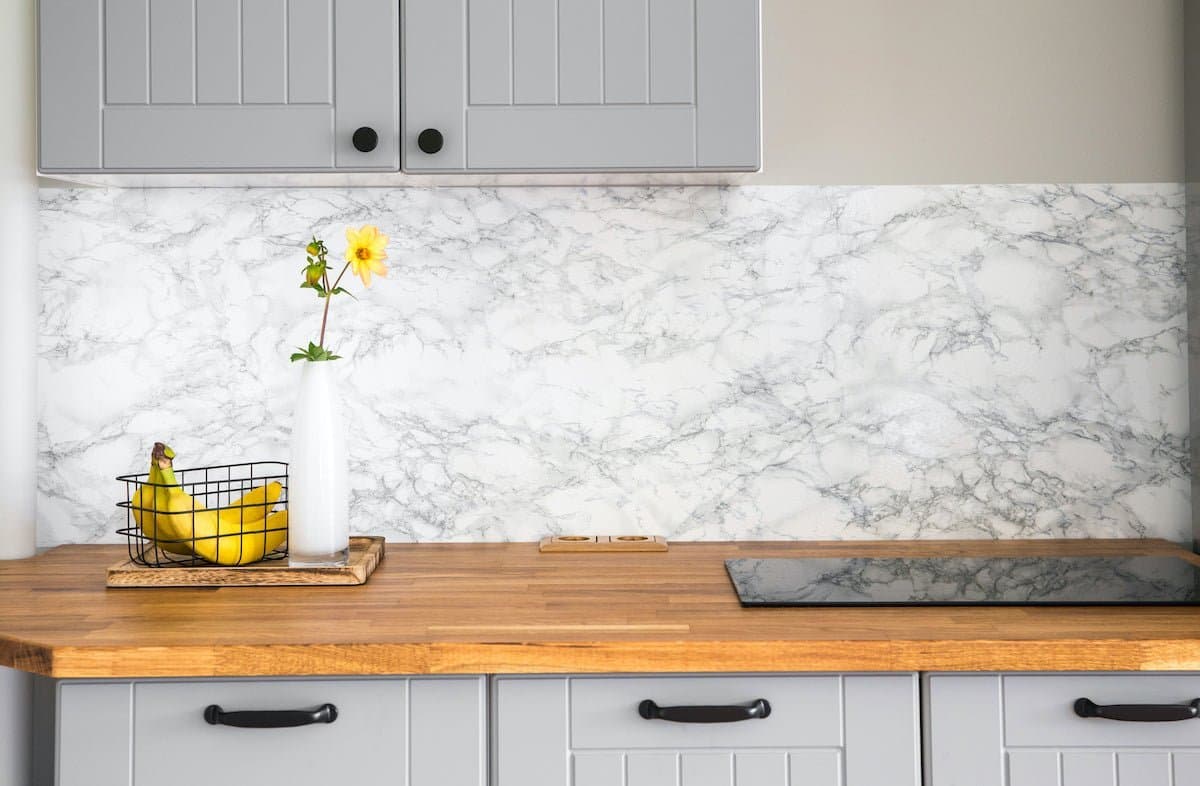
The short answer: a custom solid hardwood countertop from our shop typically lands between $70 and $115 per finished square foot, delivered — fabrication, a food-safe zero-VOC finish, and freight with lift-gate delivery all included. Species choice moves the number most, live edge adds a premium, and thickness scales it up or down. You can price your exact top, at your exact size, in about a minute in our Builder — no email address required.
What actually drives the price of a wood countertop
Every custom top we build is priced from the same three inputs — there's no mystery and no “call for pricing.”
1. The amount of wood
Length × width × thickness. A 96″ × 25″ kitchen run at 1.5″ thick contains twice the hardwood of a 48″ × 25″ section, and costs roughly twice as much. Thickness matters more than people expect: stepping from 1.5″ to 2″ adds a third more material — and a third more cost — for a more substantial look.
2. The species
Walnut and arctic oak sit at the top of the range; white oak, black oak, and mahogany in the middle; maple, cherry, ash, and red oak below that; and knotty alder is our value pick for rustic projects. Current finished per-square-foot ranges for every species are published on our pricing page, computed live from the same rates the Builder charges.
3. The cut
A straight-edge, face-grain top is the baseline. A live edge carries a premium for the same species — it takes more slab and more hand-finishing — and lands at the top of each range. Quarter-sawn white oak, milled for arrow-straight grain, prices the same as face grain in our shop.
What's included — and what to watch for elsewhere
When you compare quotes, make sure you're comparing delivered, finished tops. Our price includes:
- Fabrication — milling, glue-up, CNC flattening, and hand sanding
- Finish — a food-safe, 100% VOC-free hardwax oil, UV-cured in the shop so it arrives at full hardness
- Freight — crated shipping with lift-gate delivery, free in the continental US
Options are itemized before you pay: CNC sink and stove cutouts ($150), steel C-channel reinforcement for long spans, and our hidden-bracket systems for floating applications. Elsewhere, budget for what a low sticker price often leaves out: finishing (raw butcher block needs oiling on a schedule), edge treatment, delivery beyond a curb drop, and replacement cost when a veneer surface wears through — a solid top sands back to new instead.
Worked examples
- Island top, 72″ × 36″ × 1.5″ white oak — 18 square feet of dense, hard-wearing oak; a mid-range number that makes the island the centerpiece of the kitchen.
- Full kitchen run, 96″ × 25″ × 1.5″ walnut — the classic. Solid walnut, hand-picked boards, low-to-mid four figures delivered.
- Bar top, 120″ × 18″ × 1.75″ live-edge walnut — a statement piece; the live edge and the 10-foot span (oversize lengths carry a small tiered premium) put it at the top of the range. Building it as two seamed 60″ pieces avoids the length premium entirely.
Every one of these prices instantly in the Builder at your real dimensions — the number you see is the number you pay.
How wood compares to other countertop materials
Big-box butcher block runs cheaper because it's finger-jointed short offcuts in stock sizes, usually unfinished — our butcher block vs. solid wood guide breaks down the difference. Quartz typically runs $70–$150 per square foot installed, which overlaps our range — the comparison is less about price and more about how you want the kitchen to live; we wrote an honest wood vs. quartz comparison covering exactly that.
Five ways to keep a wood countertop on budget
- Swap the species, keep the look. Stained ash or maple gets remarkably close to walnut's depth at a much lower rate — see every stain on every wood in our swatch guide.
- Stay at 1.5″. It's the sweet spot for strength and proportion in a kitchen; thicker is a style choice, not a requirement.
- Split long runs. Spans over 8 feet carry a tiered length premium for premium-length lumber — two seamed pieces avoid it and install more easily.
- Save the live edge for where it shows. A live edge on the island and straight edges on the perimeter gives you the statement without paying the premium everywhere.
- Ask about unfinished. If you plan to run your own food-prep oil regimen, we'll ship unfinished at a small discount.
The bottom line
Custom solid hardwood is not the cheapest surface you can put in a kitchen — it's the one that gets refinished instead of replaced, warms the room instead of matching it, and comes out of our shop milled to your sixteenth of an inch. Check the live ranges on the pricing page, then price your exact top.
countertop, cut to your dimensions.
Each one is milled from solid hardwood to your exact measurements and finished by hand in our Farmingdale shop.
Design yours →Kevin has been designing and building made-to-order solid hardwood countertops, table tops, and shelving in Farmingdale, NY since 2017 — every piece milled and finished in the Hardtwood shop.
More about the shop →