

Face, Edge, or End Grain: Choosing a Construction — The Long Read
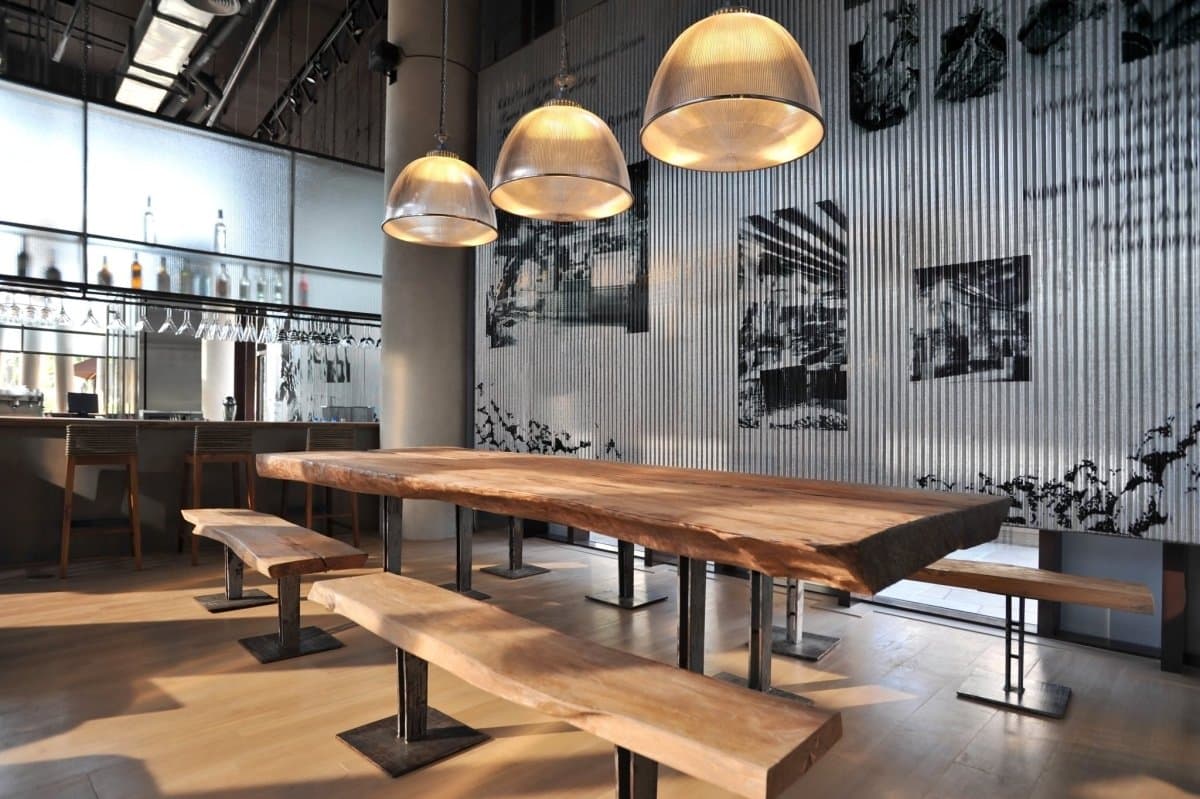
A solid wood surface is boards glued into one plane — and the single most consequential decision in its build is which way those boards face the world. Our constructions page gives the quick comparison; this is the longer read on why each build behaves the way it does.
The physics underneath
Wood is a bundle of straws. Along the straws (the grain), it's strong and nearly motionless; across them, it swells and shrinks with humidity. Every construction is a strategy for arranging the straws — trading figure, stiffness, and wear behavior against each other.
Face grain: the widest window into the tree
Lay boards flat, wide faces up, and you get the largest possible view of the wood's figure — cathedrals, rays, color movement. That's why furniture has been built this way for centuries and why it's our standard. The engineering caveat: wide faces mean wide cross-grain movement, which is why our long spans carry inlaid steel C-channel — stiffness without fighting the seasonal swell. Face grain is also the only construction that can carry a live edge, and the canvas for rift and quarter sawn cuts.
Edge grain: the panel engineer's answer
Turn the boards on edge and laminate them, and each strip's stiff axis stands vertical: a panel that resists cupping mechanically, before any steel gets involved. The face reads tight and linear — most of what the world calls butcher block. It's the daily-workhorse build: counters that get leaned on, loaded, and scrubbed every night. Wear shows less because the pattern camouflages it; refinishing is as simple as face grain.
End grain: cutting into the straws, not across them
Stand short blocks on end and the knife meets the straws point-first — the blade slips between fibers instead of severing them. That's why end grain is the true chopping build: kindest to edges, and self-healing in appearance as the fibers close back over use. It's also the thirstiest and heaviest build, which is why it traditionally lives in mineral oil when used as a working block (our care guide covers both regimens), and why it runs thick — up to 6 inches in our shop, where the checkerboard becomes architecture.
Two species, one top
Because edge and end grain are assembled from many pieces, they can alternate two species in equal parts — strips or checkerboard — priced as the average of the two boards. Walnut and maple is the classic; pairs cross families (no oak with oak), and every legal pair prices live in the Builder under the Construction step.
The price logic, plainly
Face grain is the base. Edge and end carry construction premiums for the extra ripping, glue-up, and flattening — and end grain's thickness multiplies board footage on top. Nothing is hidden: pick a construction in the Builder and watch the number move before you've committed to anything. That's the whole philosophy — the same one behind our published pricing.
piece, cut to your dimensions.
Each one is milled from solid hardwood to your exact measurements and finished by hand in our Farmingdale shop.
Design yours →Kevin has been designing and building made-to-order solid hardwood countertops, table tops, and shelving in Farmingdale, NY since 2017 — every piece milled and finished in the Hardtwood shop.
More about the shop →