
The Ultimate 2026 Wood Countertop Guide
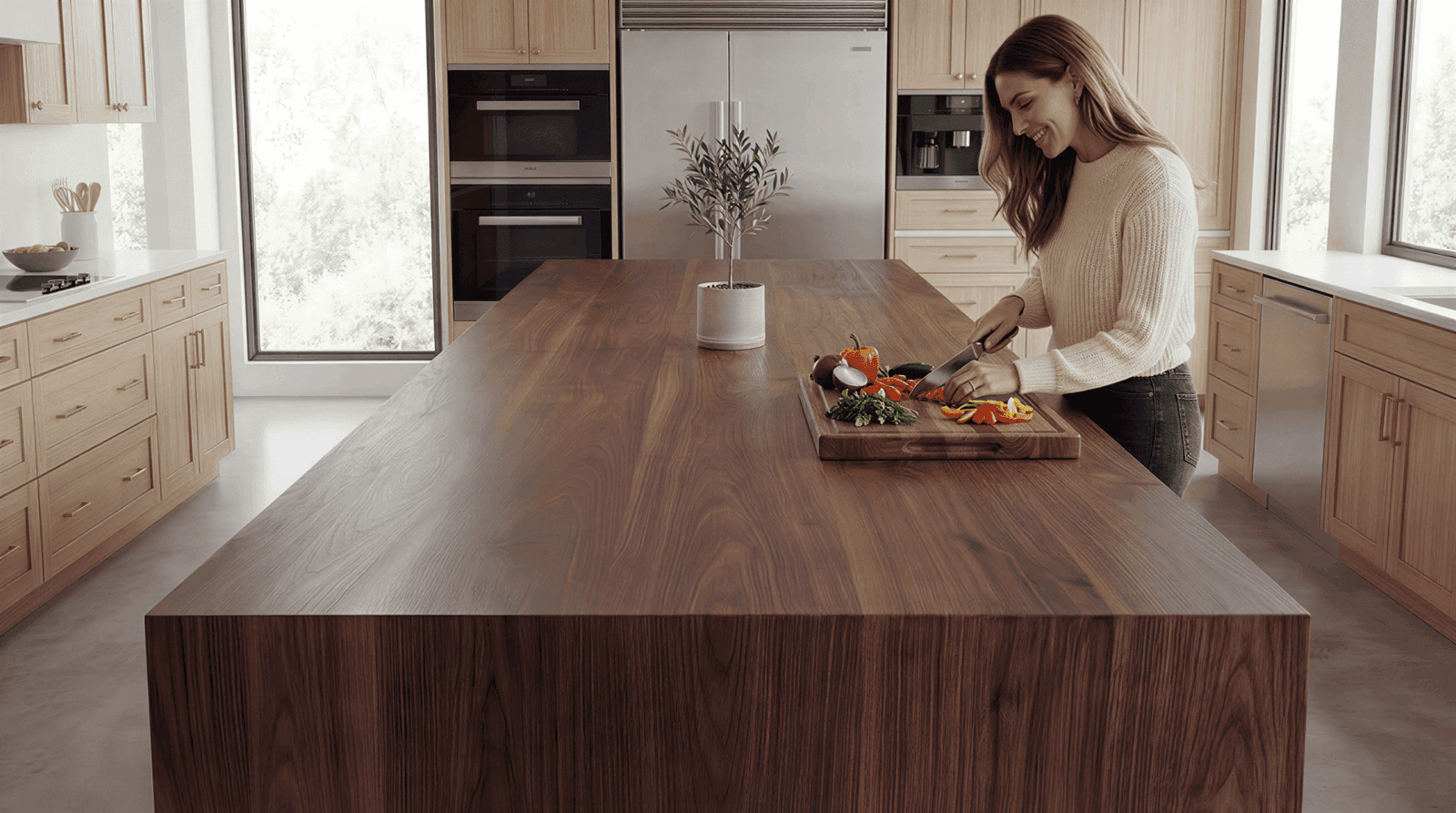
Everything you need to choose a custom wood countertop, in the order the decisions actually come up in our shop: edge style, construction, species, measurements, cutouts, reinforcement, finish, and care. Every option in this guide is something we build in Farmingdale, NY — and everything here can be priced live, at your exact dimensions, in our Builder.
- Live edge or routed edge?
- Butcher block, face & end grain
- Which wood species works best
- Measurements, overhang & thickness
- Sink & stove cutouts
- C-channel reinforcement
- Routed edge profiles
- Customizing a live edge
- Stain colors & finish
- Where wood countertops work best
- What it costs
- Care & maintenance
- Lead time & delivery
Should You Choose a Live Edge or Routed Edge Countertop?
Before choosing wood species or stain colors, decide on the edge style. The edge treatment sets the tone for the entire countertop and strongly influences its look.
Live edge countertops
A live edge preserves the natural contour of the tree. The edge is sanded smooth while keeping its organic shape — a strong option for statement islands, bar tops, and warm modern interiors.
- Choose live edge on one side or on both long sides.
- Select the edge's slope direction: upward toward the top or downward away from it.
- Works especially well where the edge is always visible, such as islands and peninsulas.
Routed edge countertops
Routed edges are shaped with router profiles to create clean, soft, or decorative looks. This is the common choice for kitchen runs, vanities, desks, and restaurant tabletops.
- Supports minimal, modern, or traditional styling.
- Pairs naturally with face-grain construction.
- Lets you fine-tune the visual character with the profile you pick.
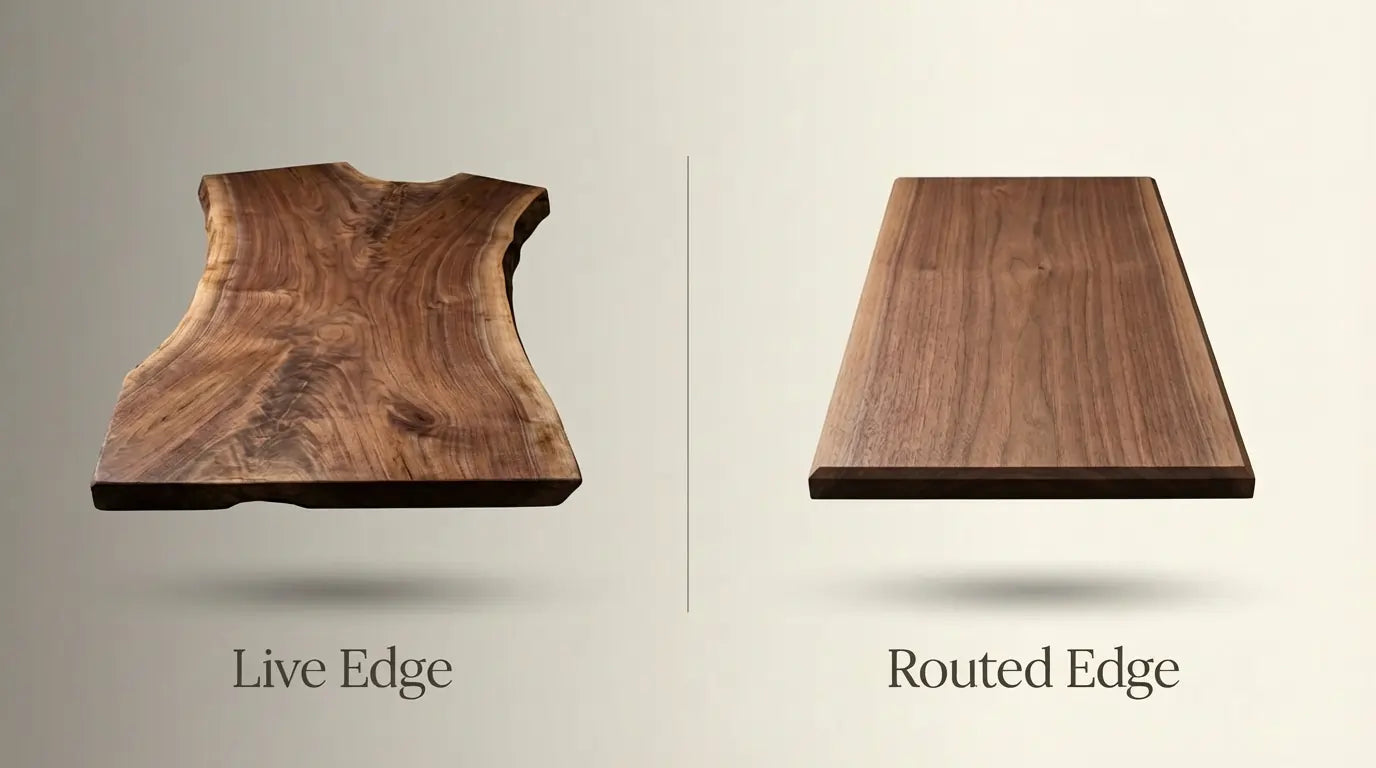
Side by side: a live edge slab next to a routed-edge walnut top.
Butcher Block, Face Grain, or End Grain: How the Top Is Built
"Butcher block" gets used loosely, but it names a specific construction — and construction is a real decision, separate from species and edge style. Every solid wood countertop is built one of three ways, depending on which face of the board looks up at you:
Wide boards, laid flat
Face Grain
Boards laid flat, wide faces up — the construction that shows the most wood. The furniture look: dining tables, desks, and any top where the surface is admired more than it is worked.
Strips on edge, laminated — butcher block
Edge Grain
Boards turned on edge and laminated — most of what the world calls butcher block. Tighter pattern, stiffer and more dimensionally stable panel: the standard for counters that work every day.
Blocks on end — fibers up
End Grain
Short lengths stood on end so you look into the fibers — the true chopping block. Cuts slip between fibers instead of severing them, so it's gentlest on knives and hides use best. The thickest build we run.
Which construction should you choose?
- Daily prep counter, island, bar, desk: edge grain butcher block — durability per dollar is unbeatable.
- Dedicated cutting surface or showpiece island: end grain — kindest to knives, unmistakable checkerboard look, milled 2.5"+ thick because the construction demands it.
- The wide, seamless plank look: face grain — the construction most of this guide's photos show.
Butcher block doesn't have to be one species, either — mixing woods is a classic move, like the walnut-and-maple checkerboard we broke down in this guide. For the full comparison, read edge grain vs end grain butcher block or the longer construction deep-dive; all three builds price live in the Builder.
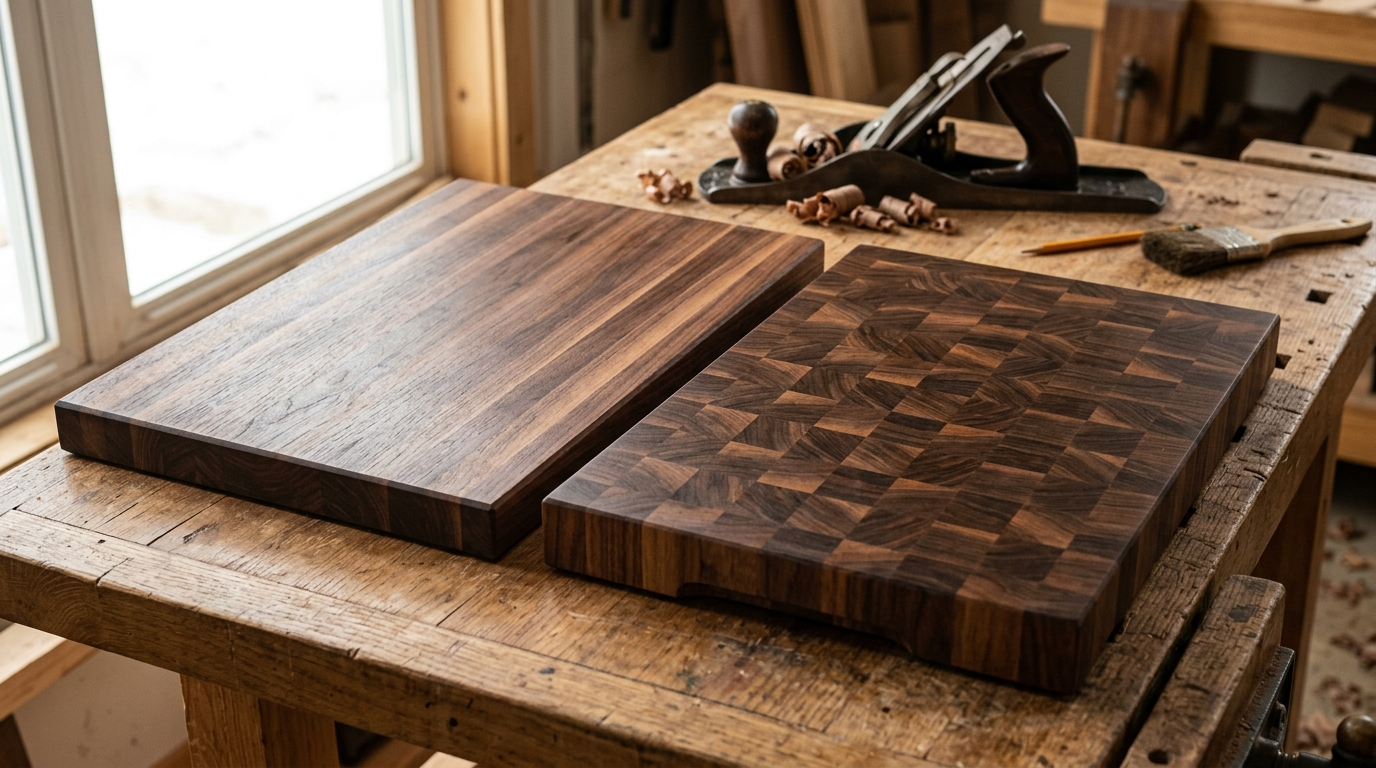
Edge grain's parallel strips next to end grain's standing-block checkerboard.
Which Wood Species Works Best for Countertops?
Species differ in color, grain, hardness, and how they take stain. This choice sets the foundation for the countertop's long-term appearance and performance. Every species below is one we mill in-house — the deeper story on each is on About Our Wood and our materials page, with Janka hardness ratings for each.
The most popular choices
- Walnut — deep, rich browns with a smooth, refined grain. Our most-requested countertop species.
- White Oak — neutral, dense (1,360 Janka), and extremely versatile; the workhorse of modern kitchens.
- Maple — light, tight grain and the hardest of our domestic staples (1,450 Janka); excellent for clean, bright spaces.
- Red Oak — warm tone with pronounced grain; a favorite for rustic and traditional work.
- Mahogany — deep reddish-brown with a classic, upscale feel.
More character options
- Arctic Oak & Black Oak — white oak taken pale and near-black; a modern palette without hiding the grain.
- Ash — bold grain pattern that stains exceptionally well.
- Cherry — warm and smooth; gradually deepens in color over time.
- Knotty Alder — warm and rustic, with visible knot character; our value pick.
- European Oak — wider, calmer grain than American white oak.
Natural vs stained
A natural finish highlights the inherent color and grain of the species; stain adjusts the tone while keeping the grain visible. Because lighting and surrounding finishes change how wood reads, we strongly recommend comparing physical samples in the actual room — you can order hardwood samples to see species and colors next to your cabinets and floors. For a longer discussion, read stained vs. natural wood.
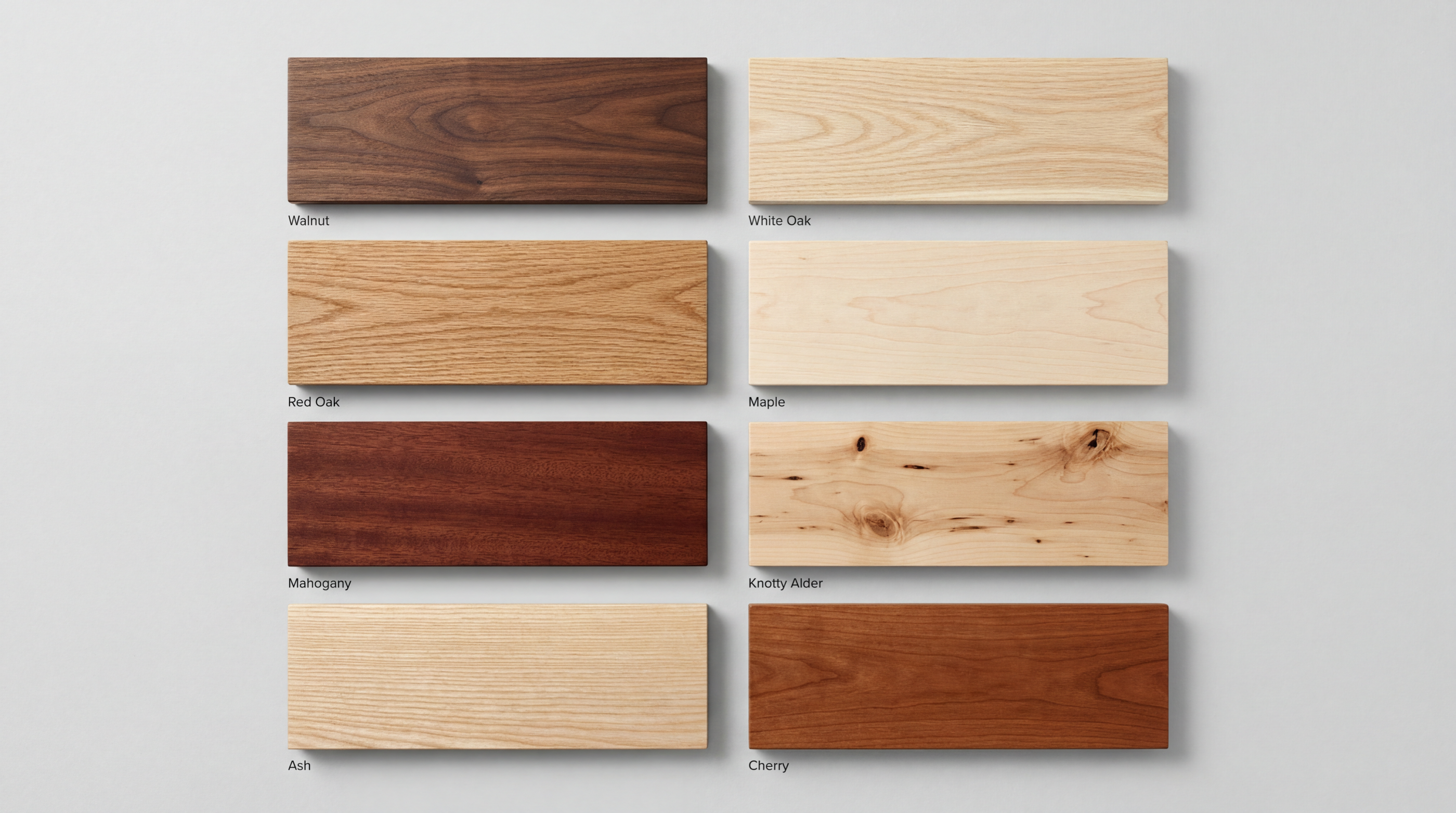
Real samples — walnut, white oak, maple, cherry, mahogany — are the reliable way to dial in species and color.
How Do You Measure for a Wood Countertop?
Accurate measurements ensure a clean fit, proper support, and the right visual proportions.
Depth (front to back)
- Typical cabinet depth: ~24"
- Typical finished countertop depth: 25"–25.5"
- Island or bar depth: often 30"–40"+ depending on seating and layout.
Length
Measure the full run of cabinets and check several points, especially along walls that may not be perfectly straight. For wall-to-wall installations, base the top on the tightest measurement and scribe or shim during installation.
- Measure the back wall in at least three locations.
- Use the smallest measurement to avoid a too-long top.
- Photos or a simple sketch help identify out-of-square conditions and seam options.
Overhang
Overhang is the portion of the countertop that extends beyond the front of the cabinets. It protects cabinet faces, improves ergonomics, and makes seating possible at islands and bars.
A standard 1"–1.5" overhang protects cabinet faces and finishes the front edge.
- Standard front overhang: about 1"–1.5"
- Seating overhang: about 10"–12"
- Support guideline: overhangs beyond ~12" typically need brackets, corbels, or steel.
How thick should a wood countertop be?
| Thickness | Typical use | Notes |
|---|---|---|
| 1.25" | Standard kitchen runs & vanities | Subtle profile, lighter weight. |
| 1.5" | Most kitchens, islands & tables | The well-balanced default — most of what we build. |
| 2"+ | Large islands, bar tops & live edge slabs | More visual presence; often paired with reinforcement. |
| 2.5"+ | End grain chopping blocks | The construction demands the thickness. |
For live edge countertops we recommend 1.5" or thicker so the organic edge feels substantial rather than thin. Thicker tops also carry deeper, more decorative router profiles better. Keep in mind thickness scales the price directly — stepping from 1.5" to 2" adds a third more hardwood.
Can Wood Countertops Have Sink or Stove Cutouts?
Yes — sink and stove cutouts are standard in wood countertops when they're properly designed, finished, and maintained. We cut them on the CNC in the shop ($150 flat, added in the Builder), which gives a cleaner fit and far less mess than cutting on site. Details and templates are covered on our sink cutouts page.
Sink cutouts
- Compatible with undermount, drop-in, and farmhouse sinks.
- We work from the manufacturer's spec sheet or template for the final cutout size.
- Corner radius, faucet locations, and accessory holes should be planned in advance.
Is a wood sink cutout safe around water?
Yes. Every top we ship is sealed on all six sides — including inside the cutout — with a food-safe, 100% VOC-free hardwax oil that repels water. Standing water should still be wiped up, but everyday splashes and normal sink use are not a problem for a properly sealed surface.
Cooktop & rangetop cutouts
- Require final cutout dimensions from the appliance manufacturer.
- Clearances to cabinets, walls, and backsplashes must be checked.
- The area around the cutout is reinforced where needed for strength and stability.
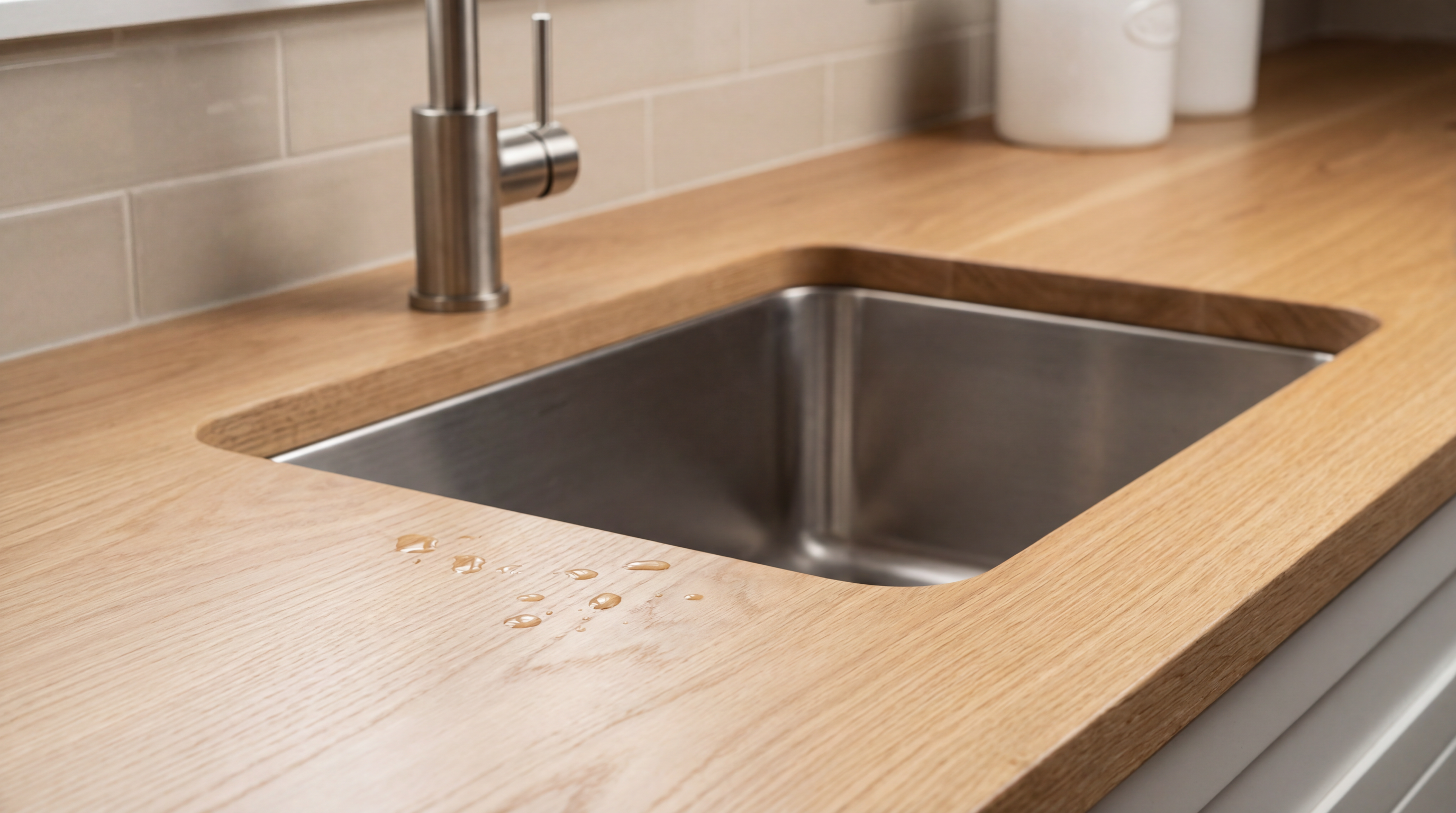
A properly sealed wood countertop performs well around everyday sink use.
When Do Wood Countertops Need C-Channel Support?
Solid wood naturally expands and contracts as humidity changes. Steel C-channel, routed into the underside, keeps wide and long countertops flatter over the years — it's one of the quiet details that separates a countertop that stays flat for decades from one that cups. We cover the full system on our C-channel reinforcement page.
When it helps
- Long spans (around 5–6 feet or more).
- Large kitchen islands and bar tops.
- Thicker slabs (2"+).
- Wide live edge tops.
How it's installed
The steel is recessed into the underside so it sits flush and stays invisible from above. It's priced per foot of width and can be added to any top in the Builder.
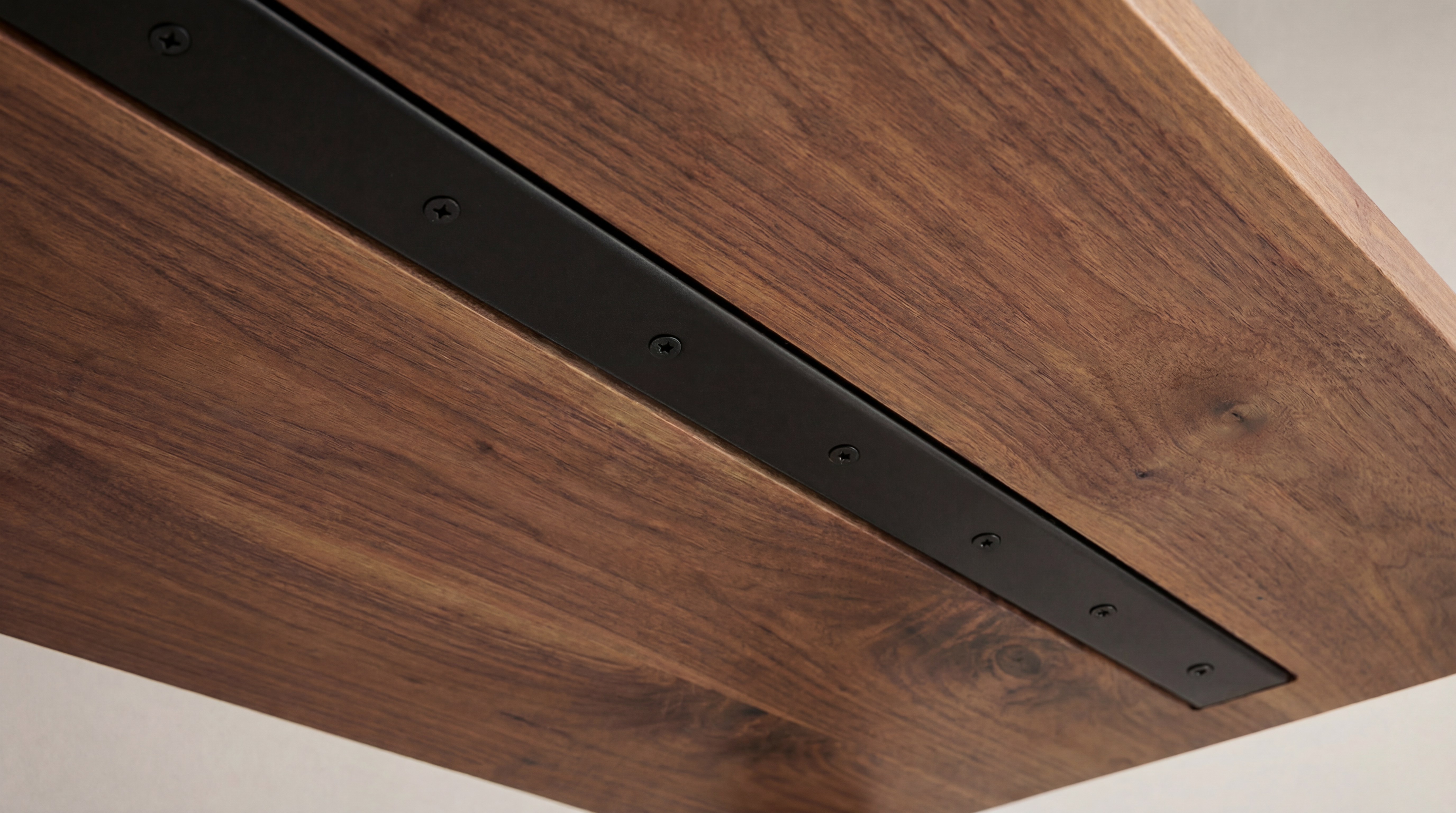
C-channel steel recessed flush into the underside of a solid wood top.
What Edge Profiles Can You Use on a Wood Countertop?
Edge profiles influence both style and perceived thickness. These are the profiles we run most often — all of them are illustrated with photos on our edge detail guide.
Squared (eased)
¼" Roundover
½" Radius
Beveled
Ogee
Cove & Bead
Beyond these, we also run Roman ogee and classical ogee (more pronounced traditional detailing), French baroque (highly ornamental, sculpted), and double round (rounded top and bottom for a very soft outline). Larger, more detailed profiles look best on thicker tops (1.5"–2"+).
How Do You Customize a Live Edge Countertop?
Live edge slabs involve decisions about how many edges remain live, how the edge slopes, and how much sapwood contrast to show.
Single vs double live edge
- Single live edge: the usual choice when the opposite side sits against a wall or backsplash.
- Double live edge: for islands, bars, and freestanding counters where both sides are visible.
Slope direction
Slope up — thicker visual profile
Slope down — lighter outline
Grain, color & character
Live edge pieces may include both heartwood and sapwood. Some designs highlight the contrast; others use stain to blend the tones together. Live edge tops are especially at home in warm modern, rustic, industrial, and nature-inspired interiors.
How Do Stain Colors Affect Wood Countertops?
Stain can dramatically change the look of a wood countertop while keeping the grain visible. Different species take stain differently, and lighting has a major impact on the final result.
Species and stain behavior
Darker species like walnut and mahogany usually look best with subtle, low-color finishes that deepen the natural tone. Lighter species — maple, ash, white oak — can be finished anywhere from nearly natural to very dark. Red oak and knotty alder show more grain and character in stronger colors.
Why samples matter
The same stain can read cooler or warmer depending on lighting. Browse the current palette on our color swatches page and pair it with hardwood samples to preview combinations in your own space before committing.
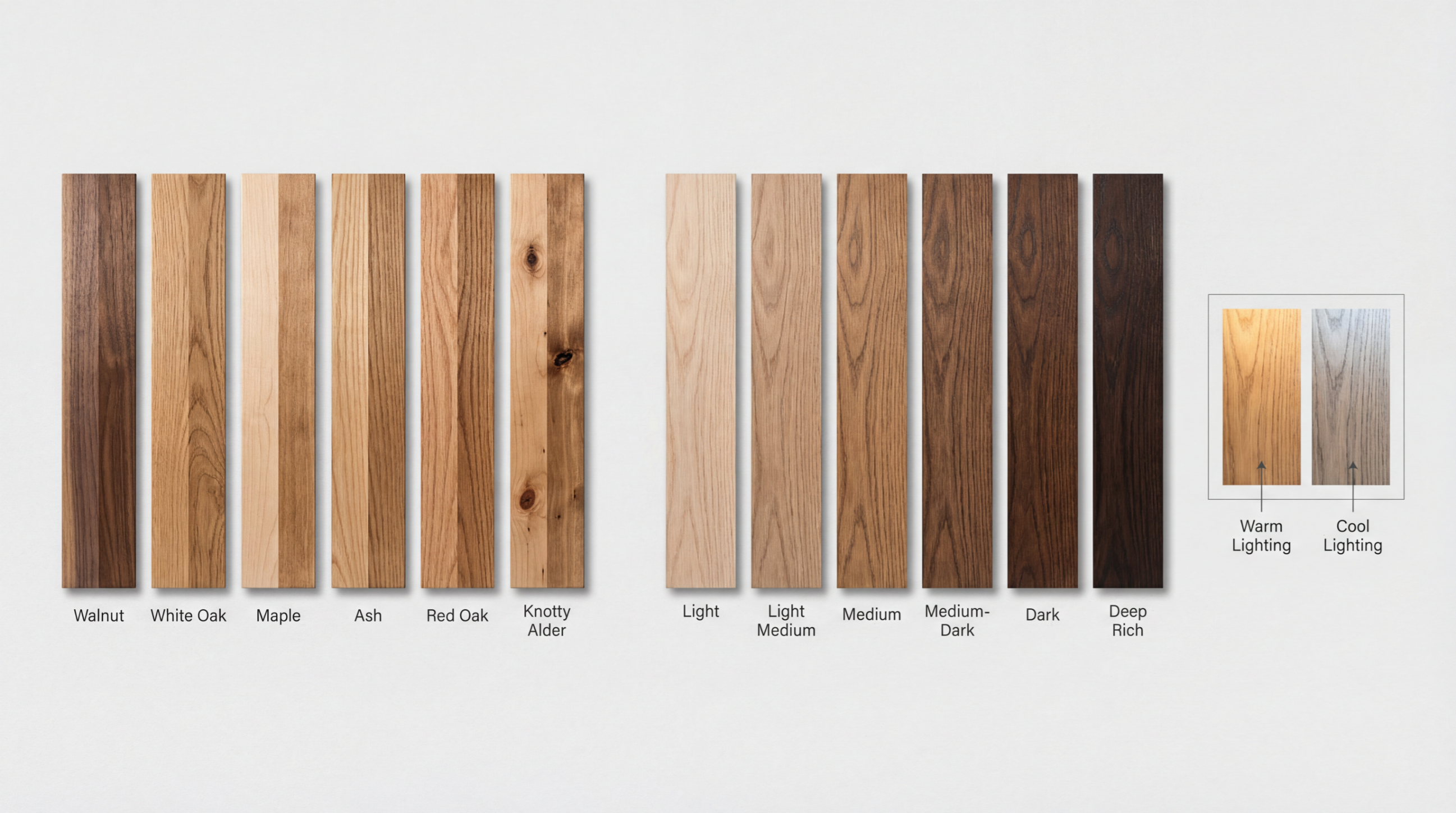
From nearly natural to deep and dramatic — the same top, very different rooms.
Where Do Wood Countertops Work Best?
- Kitchen islands — a warm, inviting center for seating and prep.
- Main kitchen runs — often paired with stone near sinks and ranges for a mixed-material look.
- Bar tops & restaurants — durable, photogenic surfaces that develop character over time.
- Bathroom vanities — a furniture-like feel when properly sealed and detailed.
- Desks & offices — a natural work surface that beats cold synthetics.
To see current options, explore the hardwood countertop collection, or compare wood against stone in our honest wood vs. quartz breakdown.
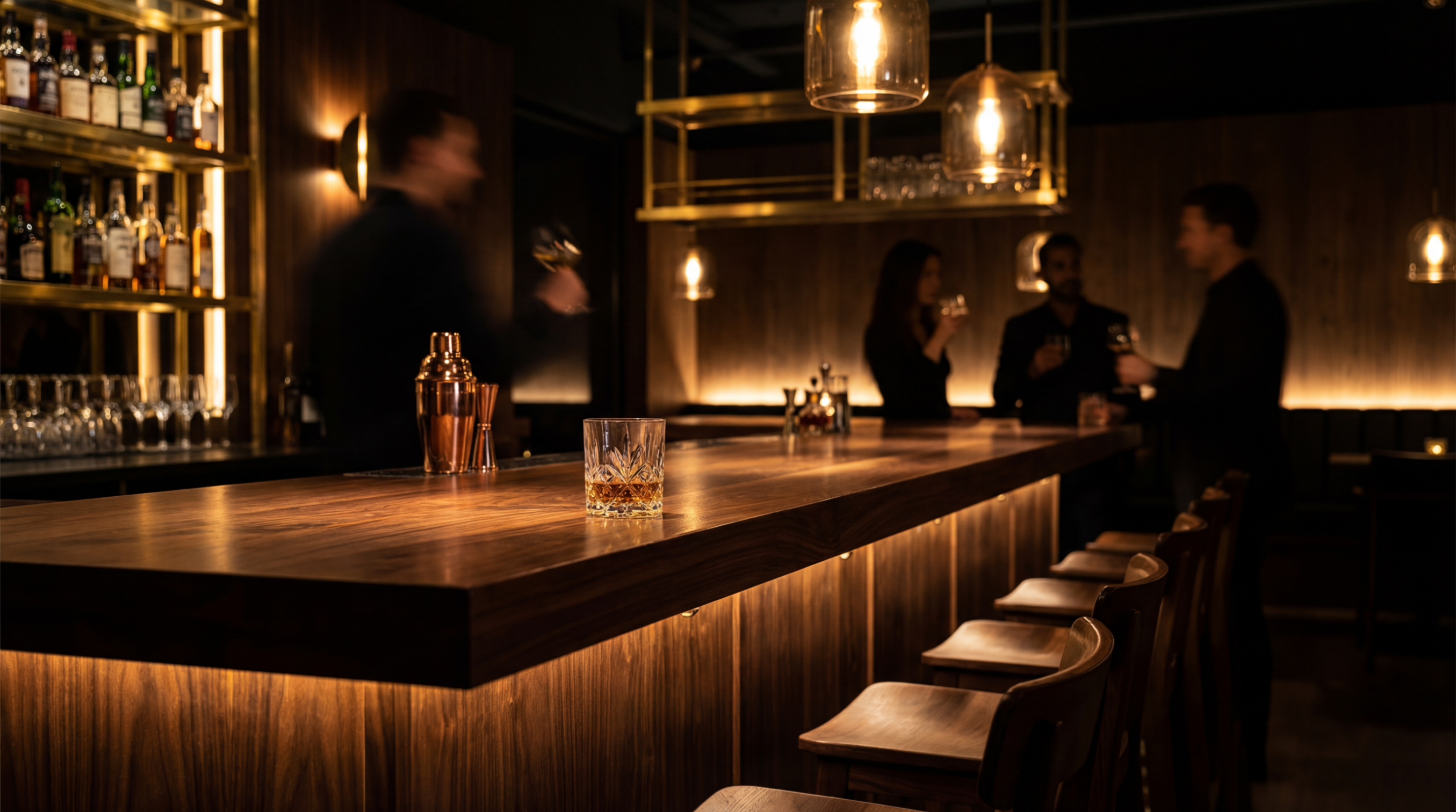
Solid wood bar tops are a natural fit for restaurants, lounges, and hospitality spaces.
What Does a Custom Wood Countertop Cost?
A custom solid hardwood countertop from our shop typically lands between $70 and $115 per finished square foot, delivered — fabrication, the food-safe finish, and freight with lift-gate delivery all included. Species moves the number most; live edge adds a premium; thickness scales it up or down. Current per-square-foot ranges for every species are published on our pricing page, and the full breakdown is in how much do wood countertops cost. Or skip the math and price your exact top in the Builder — no email address required.
How Do You Care for and Maintain a Wood Countertop?
Wood countertops are easy to live with when treated like a quality wood surface. The whole routine is short — we wrote it up in wood countertop care.
Everyday care
- Wipe up spills promptly with a soft cloth.
- Use mild soap and water; avoid harsh or abrasive cleaners.
- Use cutting boards rather than cutting directly on the top.
- Place trivets under hot pots, pans, and small appliances.
Long-term maintenance
Light scratches and wear can be touched up or blended. If the finish becomes heavily worn, a solid wood countertop can be sanded and refinished rather than replaced — the reason a solid top outlives most synthetic surfaces. Our hardwax oil finish arrives UV-cured at full hardness, so there's no oiling schedule to keep up the way raw butcher block demands.
Lead Time, Shipping & Delivery
Every top is made to order. Current lead time is 3–4 weeks from order confirmation — the same number is always shown live in the Builder and at checkout. Quoted commercial projects carry the lead time stated on the quote.
- Freight shipping with lift-gate delivery is free in the continental US.
- Tops ship crated on a pallet with padding, edge guards, and clear labeling.
- You'll receive tracking and simple receiving guidelines before delivery.
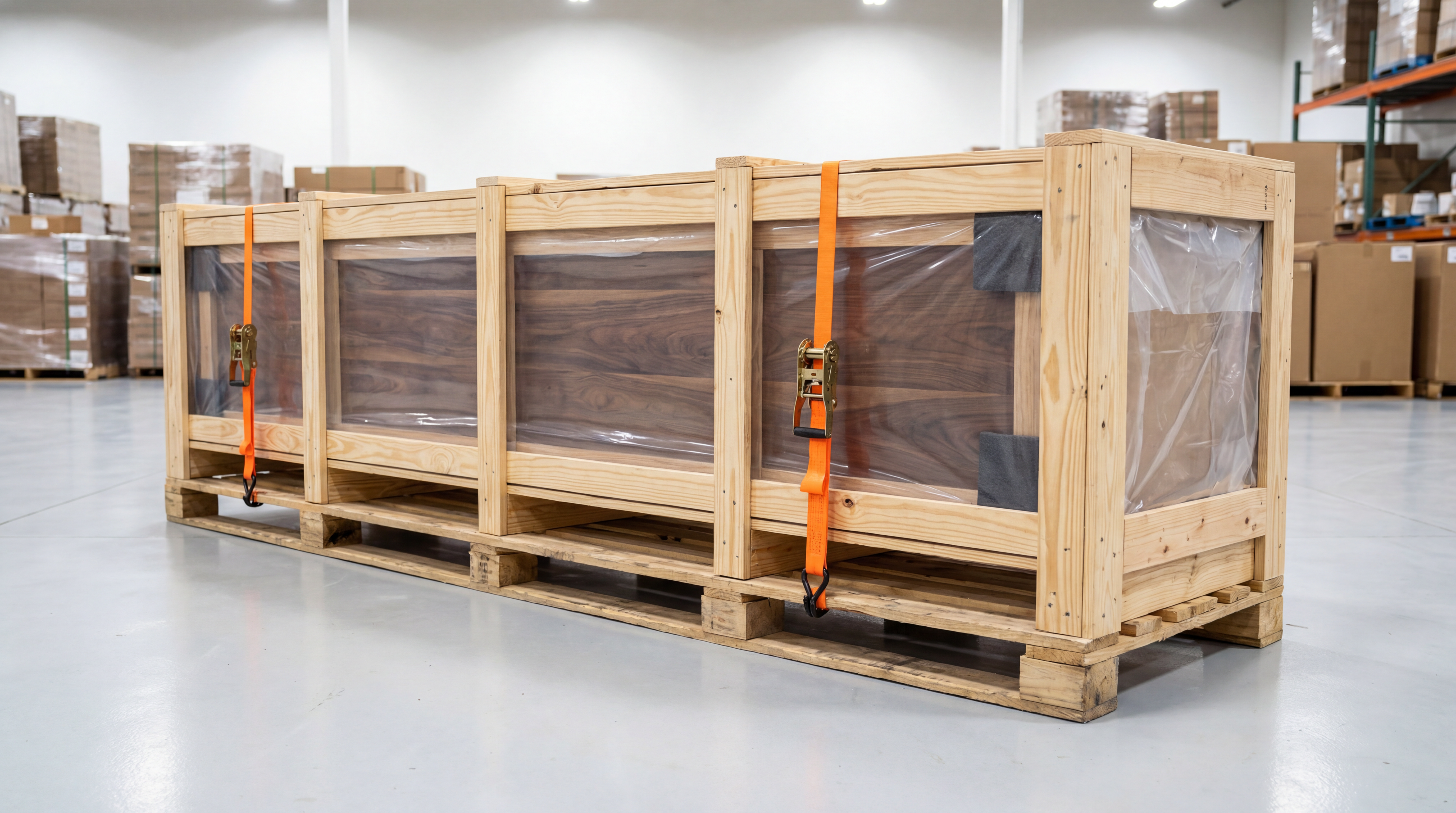
Crated, padded, and edge-guarded for freight — how every top leaves the shop.
Key Takeaways
A good wood countertop starts with an edge style (live edge vs routed), a construction (face grain, edge grain butcher block, or end grain), a durable hardwood species, and the right thickness and overhang for your layout. From there, cutouts, optional C-channel reinforcement, and stain color come together into a top that performs for decades. When in doubt, focus on accurate measurements, appropriate support, and a high-quality food-safe finish — those three drive most long-term success. When you're ready, every decision in this guide maps to a control in the Builder, priced live at your exact dimensions.
countertop, cut to your dimensions.
Each one is milled from solid hardwood to your exact measurements and finished by hand in our Farmingdale shop.
Design yours →Kevin has been designing and building made-to-order solid hardwood countertops, table tops, and shelving in Farmingdale, NY since 2017 — every piece milled and finished in the Hardtwood shop.
More about the shop →